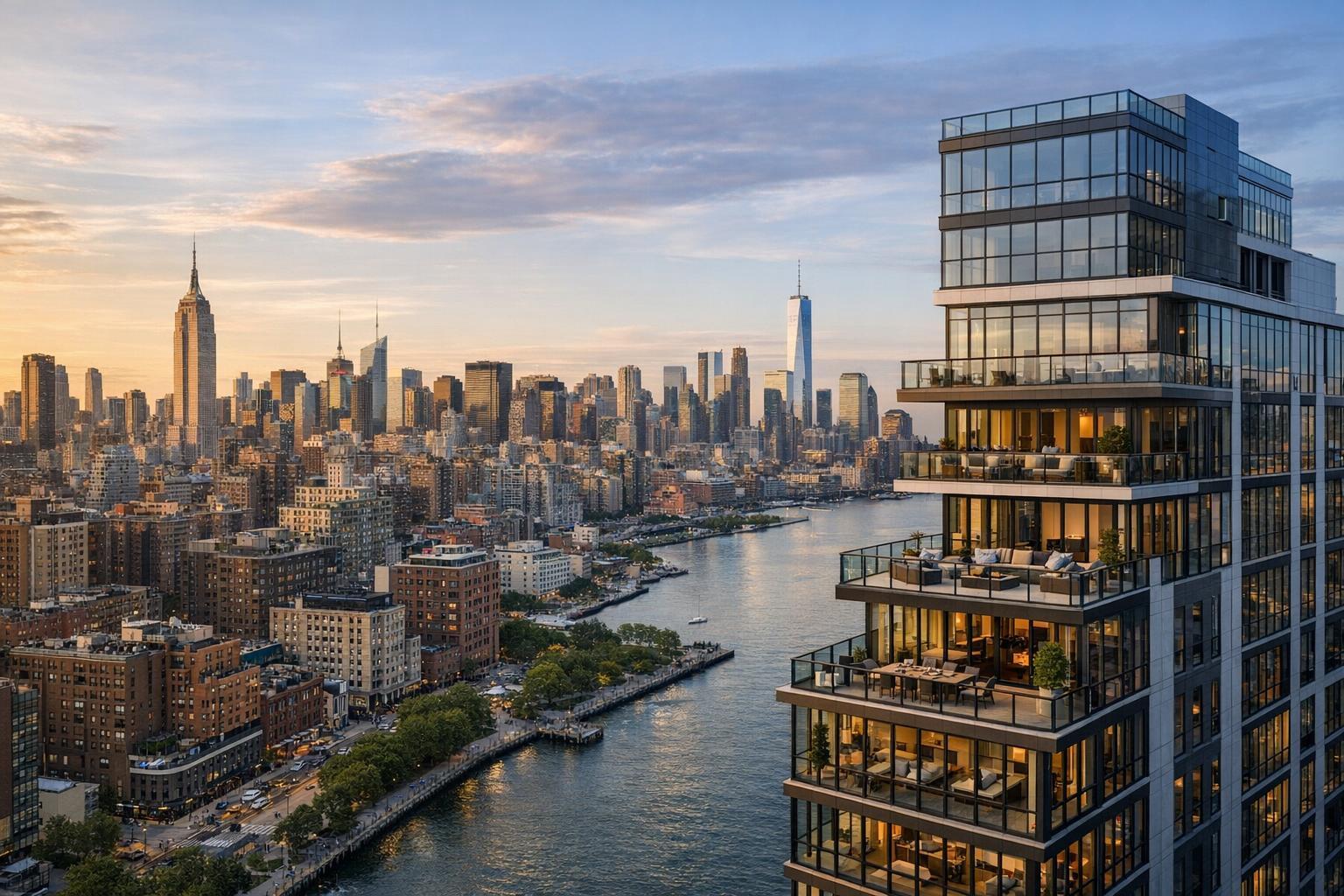
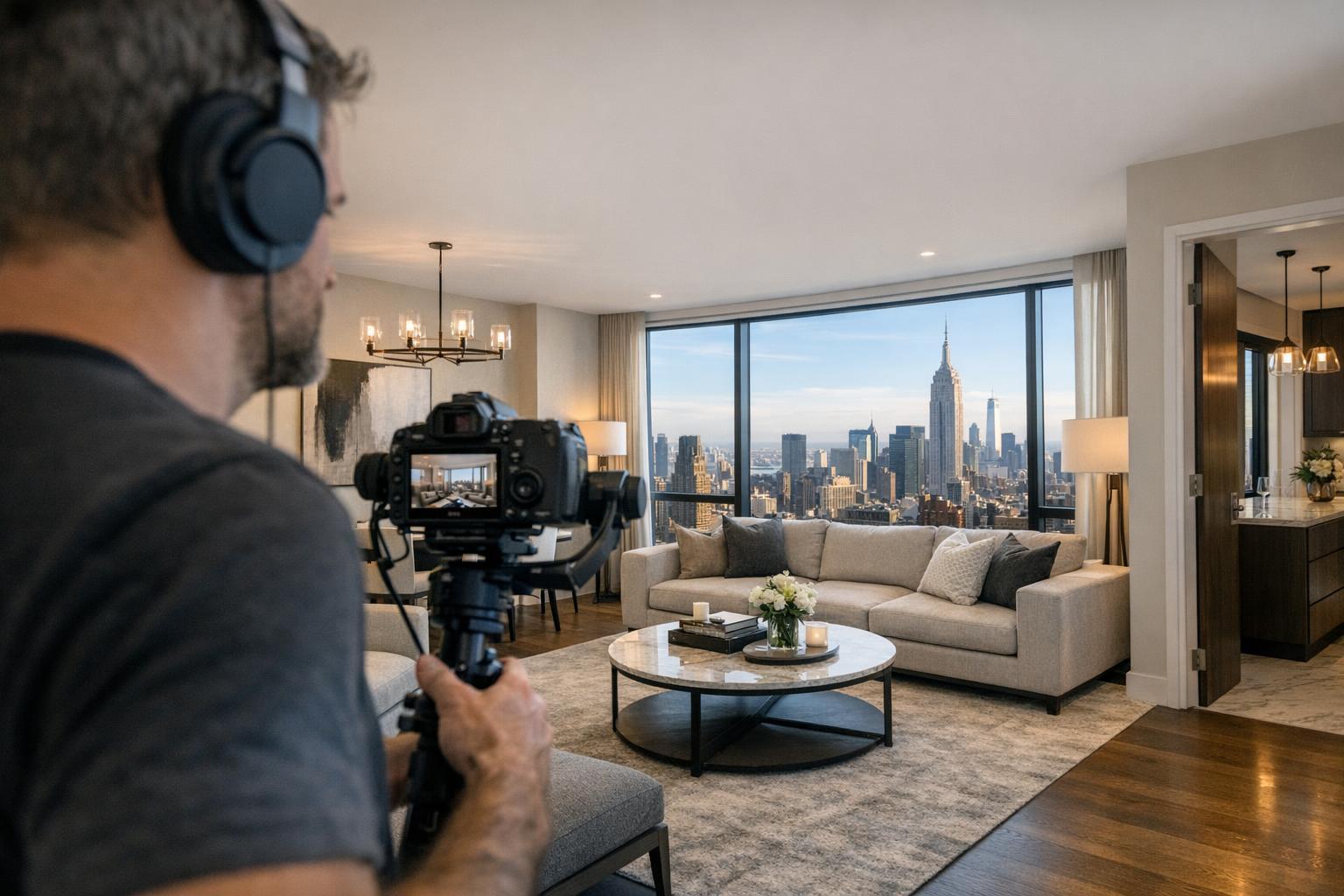
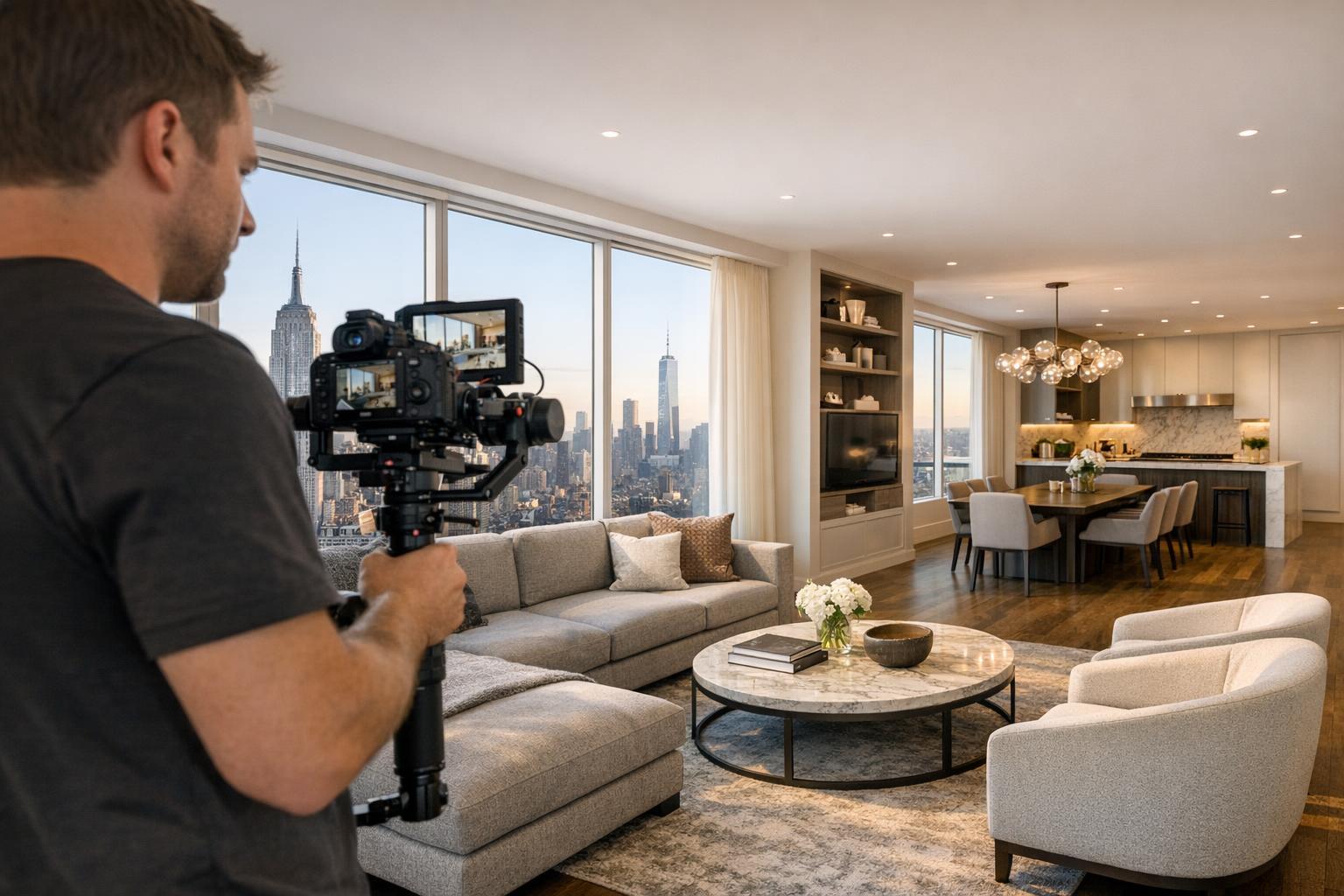
Why Hiring a Real Estate Photography Company in NYC Maximizes Property Value
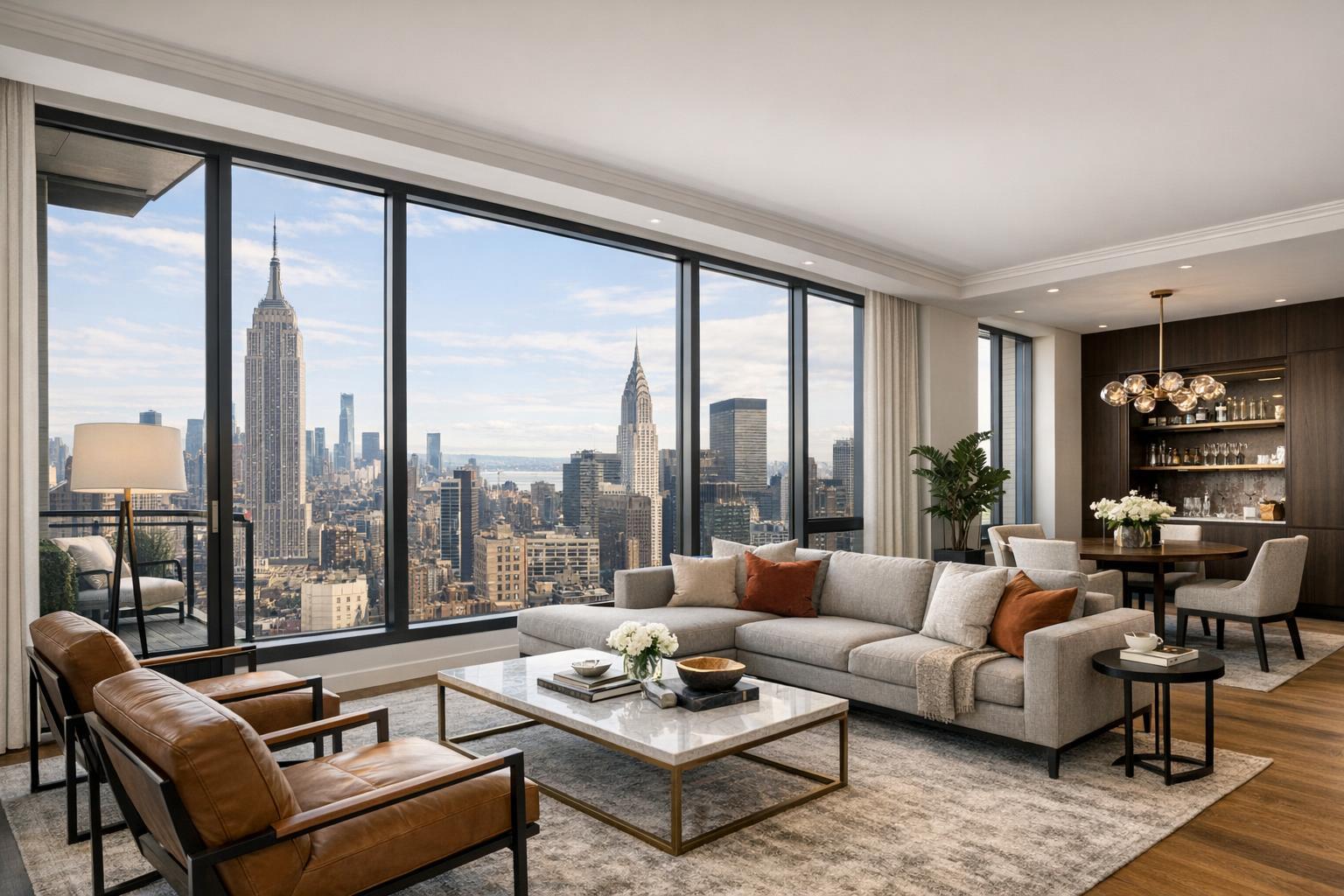
A beautifully staged luxury living room with expansive views of the New York City skyline is showcased by the real estate photography company NYC, highlighting elegant furnishings and a breathtaking backdrop.

Why Hiring a Real Estate Photography Company in NYC Maximizes Property Value
In a city as visually competitive as New York, a real estate photography company in NYC doesn’t just snap pretty pictures. It helps sellers, agents, and developers show properties at their best—before anyone ever sets foot inside. Let’s look at how choosing professional real estate photography services in NYC can have a direct impact on property value and sale speed, and how to get the most out of your visual marketing.
First Impressions Take Center Stage
When someone scrolls through NYC real estate listings, the first thing they notice is the photography. Whether you’re marketing a co-op on the Upper East Side, a Brownstone in Brooklyn, or a modern Jersey City condo, the visual experience immediately affects how a listing is perceived. If a home’s photos are dim, awkwardly composed, or crowded with clutter, viewers might never get to the part where its real strengths are revealed.
Quality photography draws attention to aspects that matter most to buyers and renters:
- The way light enters a space
- Ceiling heights and unique architectural touches
- Kitchen finishes and modern appliances
- The flow and proportion of communal areas
- Outdoor access and building amenities
- Essential storage and layout logic
At its best, real estate photography doesn’t try to fool anyone. Rather than exaggerating square footage or hiding flaws, it reveals a property’s character with clean, honest, and organized images. The result? A listing that’s easier for serious buyers to evaluate—a win for both sellers and agents.
Why DIY Photos Often Sell your Listing Short
Smartphone cameras have come a long way, but selling a New York apartment isn’t the same as sharing a quick social post. NYC spaces often challenge even experienced photographers: extreme window light can wash out interiors, tight entryways can be hard to capture, and a poorly chosen lens might leave rooms looking warped or misleading.
Common DIY mistakes include:
- Mismatched lighting (sunlight plus assorted bulbs causing odd color casts)
- Crooked lines, especially around doors, windows, or cabinetry
- Gloomy corners or overexposed skylines
- Accidental mirror reflections showing the photographer
- Angles that don’t do justice to the space or the flow
- Photo orders that make the floor plan confusing
- Random clutter blocking key details
A professional real estate photographer in NYC knows where to stand, how to light, and how to sequence a shoot so that rooms feel open, inviting, and easy to understand. That level of attention helps buyers imagine themselves in the home—and keeps your listing looking purposeful and polished.
What Makes Professional Photography More Than Just the Shoot
Good property photography starts before the camera comes out, and continues after the last shot is taken. Preparation, capture, and editing all work together to create results that bring buyers in the door.
Preparing the Space: Tips for Sellers and Agents
While a skilled photographer can work around small distractions, a well-prepped home always photographs better. Here are some effective ways to help each room look its best:
- Clear kitchen surfaces of appliances, packages, and mail
- Remove toiletries and personal items from bathrooms
- Make beds and straighten loose linens
- Hide pet supplies, cords, bins, and cleaning products
- Replace any burnt-out bulbs and use warm-toned lighting when possible
- Open window treatments only if daylight complements the space
- Move vehicles out of exterior shots
- Arrange access to amenities, rooftops, or common areas in advance
Furnished listings benefit from a “less is more” approach. The aim is to keep a sense of home without letting personal belongings overshadow the features of the space. For empty or vacant units, photos should highlight room shape, light, and potential. If virtual staging is considered, rooms must be fully empty, or clutter and furniture should be removed before editing.
What Happens Behind the Scenes
Professional photography relies not just on camera skills, but on editing and sequencing as well. Raw photos are edited for accurate color, balanced exposure, and true-to-life lines. Each image is chosen with the property's key selling points in mind, resulting in an organized, trustworthy gallery that supports your marketing.
At RealtaSnap, the focus is on photographing each listing as it exists—keeping things real, but refined. Approved edits (like selective object removal or minor touch-ups) are sometimes possible, but major digital overhauls, structural changes, and fictitious renovations are out. The priority is accuracy and clarity.
Matching Your Media to the Property
Every New York and New Jersey property has its own visual story. That’s why a one-size-fits-all approach doesn’t do justice to the region’s diverse housing stock. A classic West Village apartment might need a focus on vintage moldings and cozy nooks, while a new Williamsburg condo is all about open kitchens, sleek finishes, and rooftop views.
The best real estate photography services in NYC tailor their approach to each space:
- Downtown lofts are captured to highlight volume and adaptability
- Townhouses benefit from sequences that connect interior rooms with gardens or terraces
- Pre-war buildings need images emphasizing period details and smart room divisions
- Modern units call for clear visuals of luxury amenities and up-to-date appliances
A thoughtful photographer doesn’t capture just for quantity’s sake—they prioritize images that will actually help buyers and renters understand what makes the space unique, without overwhelming them with irrelevant details.
The Power of Visual Media in Real Estate Marketing
While still photos are the foundation of most NYC real estate listings, sometimes additional media can take the marketing further:
- Video walkthroughs show how rooms connect, highlight building entries, and give a sense of scale
- Floor plans clarify spatial relationships and make it easier for buyers to mentally furnish the space
- 3D virtual tours (like Matterport) enable remote prospects to view every angle interactively
- Aerial photography through drones adds valuable context for listings with outdoor areas, proximity to parks, or scenic views (subject to airspace and safety rules)
It’s wise to select media with purpose—a small studio might need only excellent photos and a floor plan, while a large house or mixed-use property could benefit from a mix of images, video, and drone captures. The goal is always to support buyers in making informed decisions, not to overwhelm them with gimmicks.
Choosing a Real Estate Photography Company in NYC: What to Value
With so many NYC-based providers, how do you know which one is right for your property? A few features set the best real estate photographers apart:
A Balanced, Clearly Edited Portfolio
Look for sample work that includes properties similar to yours. Are rooms realistically proportioned, not distorted? Are colors consistent, lighting natural, lines straight, and edits subtle? Overly stretched wide-angles might get clicks, but they can leave buyers underwhelmed at showings. Authentic representation is key.
Transparent Service and Pricing
Different listings call for different levels of coverage. RealtaSnap, for example, offers packages starting at $149 for 10 professional images, with the option to scale up to 50 photos for larger properties. This lets clients choose the right fit whether they have a compact co-op or a spacious multi-unit building. For full pricing details, you can refer to the NYC real estate photography services page.
Streamlined Booking and Communication
NYC real estate is fast-paced, and so are its logistics. The booking process should make it easy for clients to select services, provide access details, and confirm appointments—without endless back-and-forth. RealtaSnap’s online booking system enables clients to schedule, add special instructions, and pay in one step.
Expert Guidance on Add-Ons
Not every extra service is right for every listing. A professional provider will give candid advice on what’s necessary. For example:
- Virtual staging works best in vacant properties, and rooms need to be clear—or cleared digitally—before staging can be applied.
- Listing video is captured at the property, not pieced together from stills.
- Drone work must comply with FAA rules, appropriate airspace, weather, and access.
Your provider should help you make choices based on what’s actually needed for your goals.
A Smart Investment in How Your Listing is Seen
Great photography isn’t a substitute for pricing the property correctly, maintaining it well, or expert representation. But it can mean the difference between a listing that feels cared-for and one that’s overlooked. For owners and agents, professional images provide marketing assets that can be used for web, print, and social media, and can make every step of the sales cycle a little smoother.
Listing agents, owners, and developers in Manhattan, Brooklyn, Queens, the Bronx, Staten Island, or New Jersey can all benefit from putting a careful, professional touch on their property visuals. If you’re preparing for a sale or lease, you can explore your options for NYC real estate photography and see how each service supports your unique listing.
Ready to make your property stand out? Learn more or book an appointment at www.RealtaSnap.com.
FAQ
Question: How many photos should my NYC real estate listing have?
Answer: It depends on the size and type of property. Compact apartments might only need a focused set of images covering main rooms and unique features. Larger homes or multi-unit buildings often require more photos to ensure every important room and amenity is clearly shown.
Question: Is virtual staging a good idea for an empty apartment?
Answer: Virtual staging helps buyers visualize how vacant rooms could function, especially in living, dining, or bedroom spaces. It works best when rooms are fully cleared out (physically or via approved digital clutter removal) and should always remain true to the actual room’s proportions.
Question: How can professional photography help small apartments appeal to buyers?
Answer: With thoughtful composition and lighting, a professional photographer can show a small apartment at its most open, bright, and inviting—without using extreme angles or wide lenses that could mislead on space. The goal is to communicate the property’s strengths and layout honestly.