What Real Estate Media Does a Listing Need?
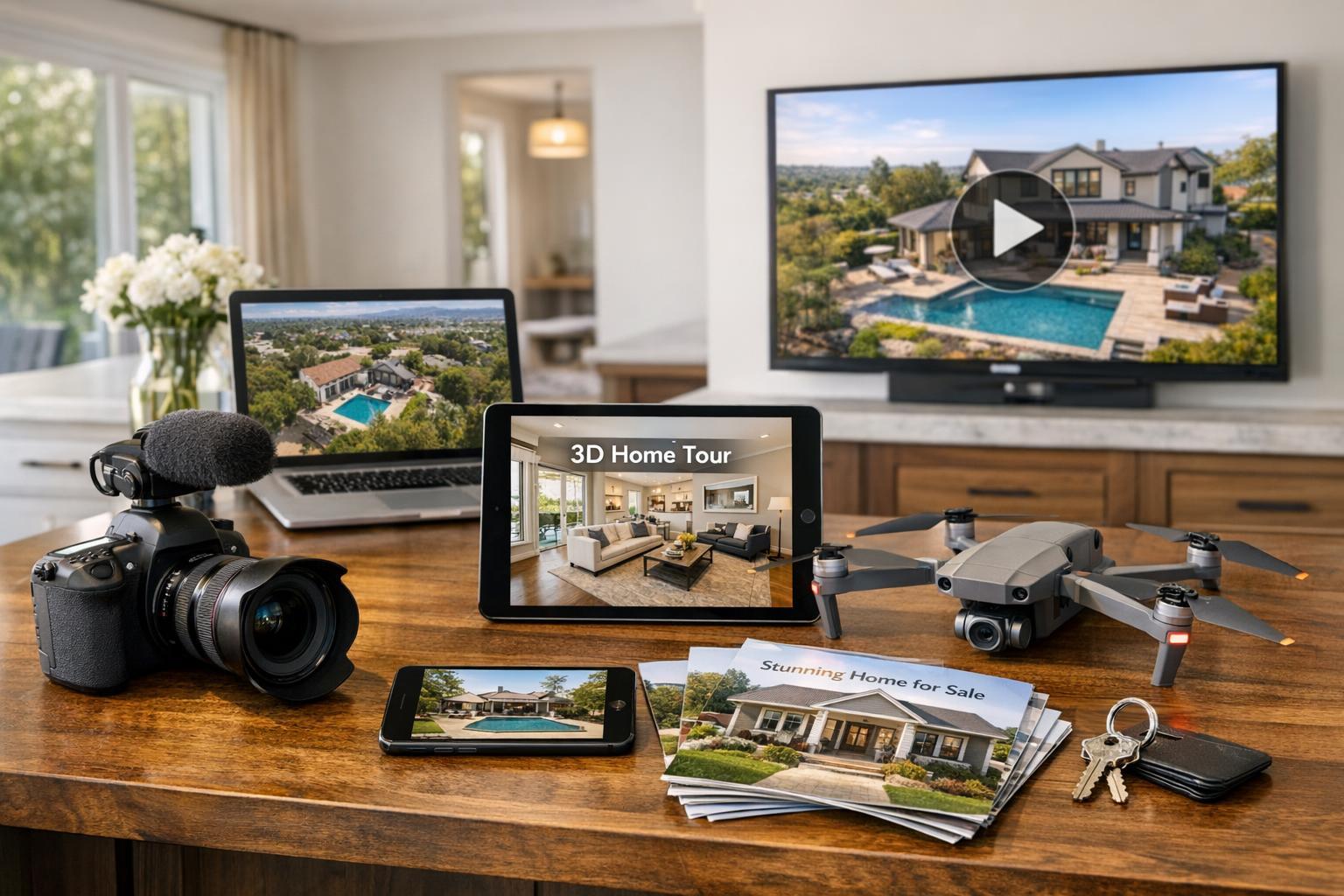
Real estate media tools, including a DSLR camera, drone, brochures, laptop, and tablet displaying a 3D home tour, are arranged on a table with a television in the background showing a luxury home.

What Real Estate Media Does a Listing Need?
Choosing the right real estate media can be the difference between a property that sits and one that moves. When crafting a listing, it’s not about piling on every available marketing service, but selecting the property marketing assets that make the specific space easy to understand and appealing to the target buyer or tenant.
In NYC and New Jersey, where units range from compact studios to sprawling homes and distinctive brownstones, every property deserves a tailored approach to media. Let’s break down how to select the most effective real estate media—and when to use each option.
Begin With the Listing, Not the Service Menu
The most valuable step is to look at the property itself rather than jumping to a preset bundle of media assets. Think first about what a prospective buyer, tenant, or stakeholder needs to see to make a decision or imagine the space.
A one-bedroom Manhattan apartment? Professional photography and a clear floor plan might be all you need. Selling a multi-level Brooklyn brownstone? Video walkthroughs and possibly aerial views could make a critical difference. Large New Jersey homes often benefit from drone photography to show property lines, landscaping, or a pool—details you’d never capture from ground level.
Ask yourself:
- Is the layout complex enough to confuse buyers without a floor plan?
- Does the property offer views, outdoor areas, or a unique location feature?
- Are there features—like multiple levels, garden access, or open loftiness—that still photography alone can’t communicate?
- Are you marketing to out-of-area buyers, companies, or investors who can’t easily visit in person?
- Is the property vacant, and could buyers benefit from seeing furnished versions through virtual staging?
- Are there building logistics, access challenges, or restricted on-site hours that will affect what can be captured?
Rather than starting with the assumption that every service should be ordered every time, zero in on the details that matter for clarity and decision making.
The Essential Role of Professional Photography
For almost every property, high-quality professional photography should be non-negotiable. Clear, beautifully executed photos are the foundation of any strong listing. They’re the first thing buyers see on portals, agent sites, and social feeds.
Great listing photos do more than document rooms—they highlight sightlines, daylight, proportions, finishes, and flow. Whether it’s a Manhattan condo with high-gloss cabinetry or a Brownstone’s meticulously restored staircase, photography should make these details immediately apparent.
Photography is especially valuable for:
- Apartments and condos where every room must shine
- Occupied homes that have been decluttered and styled for showings
- Listings with memorable architectural features or exceptional lighting
- Commercial and office spaces where condition, layout, and finishes matter
- Any property where the “cover photo” sets the tone for buyer interest
Keep in mind, even if you later add video or 3D tours, strong stills remain the backbone of marketing. If you’re prepping a listing in NYC or New Jersey, RealtaSnap helps agents start with professional photography, then layer in only what’s useful for the listing’s success.
Interested in what that looks like? View examples of RealtaSnap’s work at www.RealtaSnap.com.
When Should You Add Video?
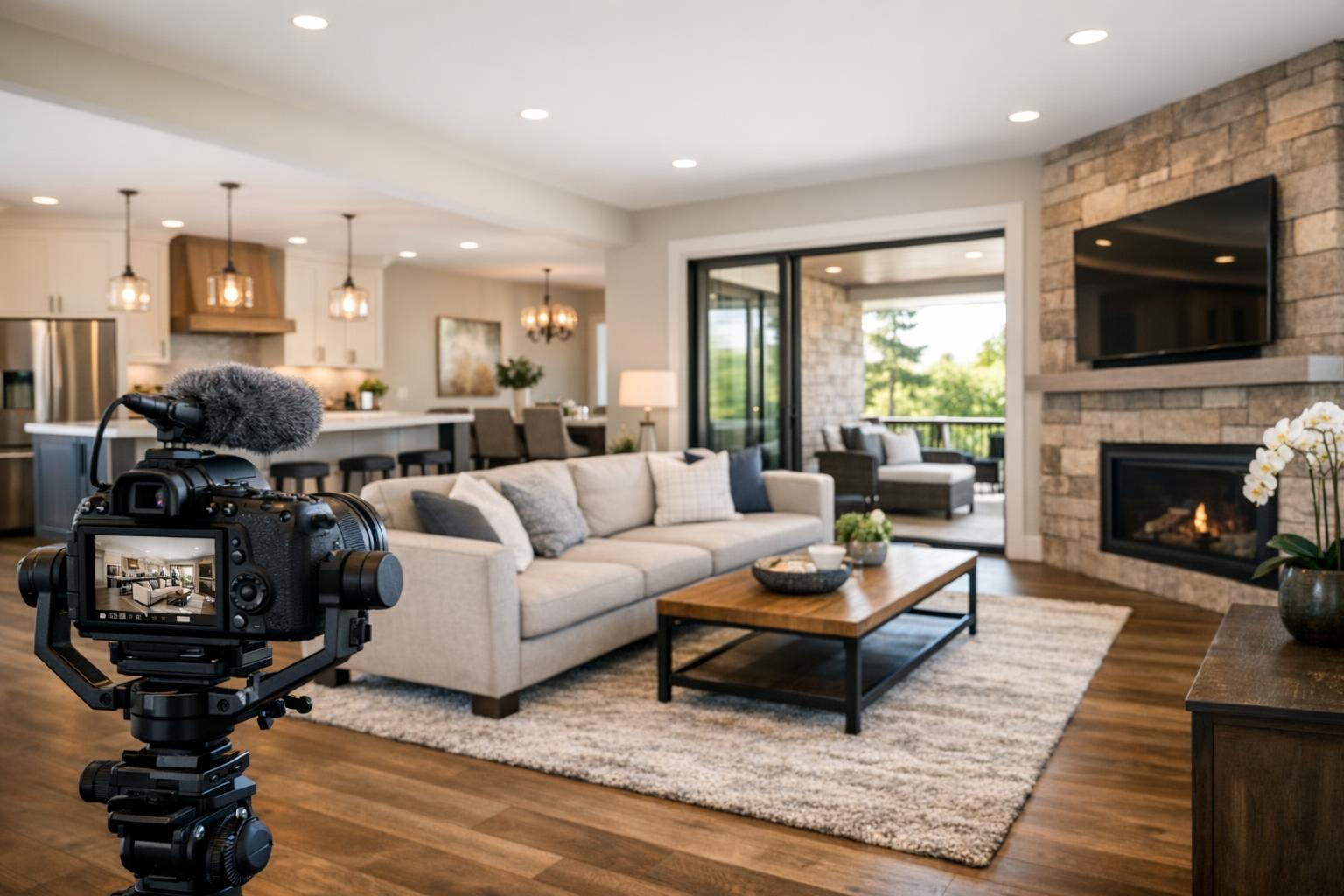
Video is at its best when movement and flow are essential to the story. A video walkthrough can help a buyer experience the natural sequence: the way an entry opens toward the entertaining area, how the kitchen connects to dining, or the journey up a townhouse staircase.
Video adds meaningful context for:
- Multi-level homes, brownstones, and townhouses
- Spacious properties where layout or movement matter—think large New Jersey homes with both indoor and outdoor entertaining spaces
- Lofts, duplexes, or penthouses where volume and openness matter
- Commercial spaces with circulation or access quirks
Not every listing warrants video. Studio apartments or simple one-bedrooms may not need it. But for homes where the flow can’t be captured by stills—or where remote decision-makers need to “walk through” virtually—video becomes much more compelling.
With RealtaSnap, listing videos are always captured on-site. No slideshow-style videos created from still photographs—true motion capture translates to a smoother, more informative result.
Learn more at RealtaSnap’s videography service page.
Clear Up Confusion With Floor Plans
Sometimes buyers get lost trying to piece together a layout from photos. Floor plans solve this by presenting dimensions, spatial relationships, and room connections at a glance.
Floor plans offer immediate benefits when:
- Bedrooms need to be positioned for privacy or special use
- Room sizes and relationships might be confusing from photos alone
- Unique configurations (split bedrooms, alcoves, finished basements) exist
- Buyers need to see if a den, home office, or extra room suits a specific need
- Multi-floor properties (like duplexes or townhomes) require clarity
- Commercial spaces have complex unit or office layouts
For NYC apartments—especially those with odd shapes or hallway-heavy configurations—a floor plan helps buyers decide whether it’s worth touring in person.
Important: Accurate floor plans require on-site capture. They can’t be built from old PDFs or marketing materials. If a property is a combination of multiple units, every accessible space has to be scanned to create an accurate plan.
Adding Interactive Exploration: 3D Virtual Tours
3D virtual tours (like Matterport or Zillow 3D Home) allow potential buyers or tenants to move through the space online as if they’re visiting in person. This self-directed technology is highly effective for large homes, luxury listings, or any property where remote viewing adds value.
3D tours are most useful for:
- Properties expecting interest from buyers or renters outside the local area
- Listings with multiple rooms or complex layouts
- High-end condos, furnished model units, or luxury townhouses
- Commercial listings where stakeholders might need remote access
A 3D tour doesn’t replace good photography but complements it, offering a navigable view alongside curated images. Like floor plans, 3D tours require on-site capture and can’t be re-created from photos or schematics.
Find more details at RealtaSnap’s Matterport and virtual tours page.
When Does Drone Media Make Sense?
Aerial photos and video give buyers a bird’s-eye view, often helping showcase property boundaries, landscaping, rooflines, or proximity to parks, water, and city features.
Typical drone uses include:
- Large suburban or rural homes (especially in New Jersey)
- Properties with lots of land, pools, or private outdoor spaces
- Homes with waterfront access or important view corridors
- New developments or commercial buildings
- Brownstones or townhouses where aerial context shows off the setting
A word to the wise: Drone feasibility depends on many factors—FAA rules, weather, airspace restrictions, roof access, and pilot discretion. In NYC, tall buildings and dense locations add an extra layer of complexity, so aerial shoots are always case by case.
If drone isn’t possible, strong exterior photography and selected angles can often achieve the next best thing.
Explore what’s feasible for your listing at RealtaSnap’s drone media page.
Virtual Staging: Make Empty Rooms Feel Inviting
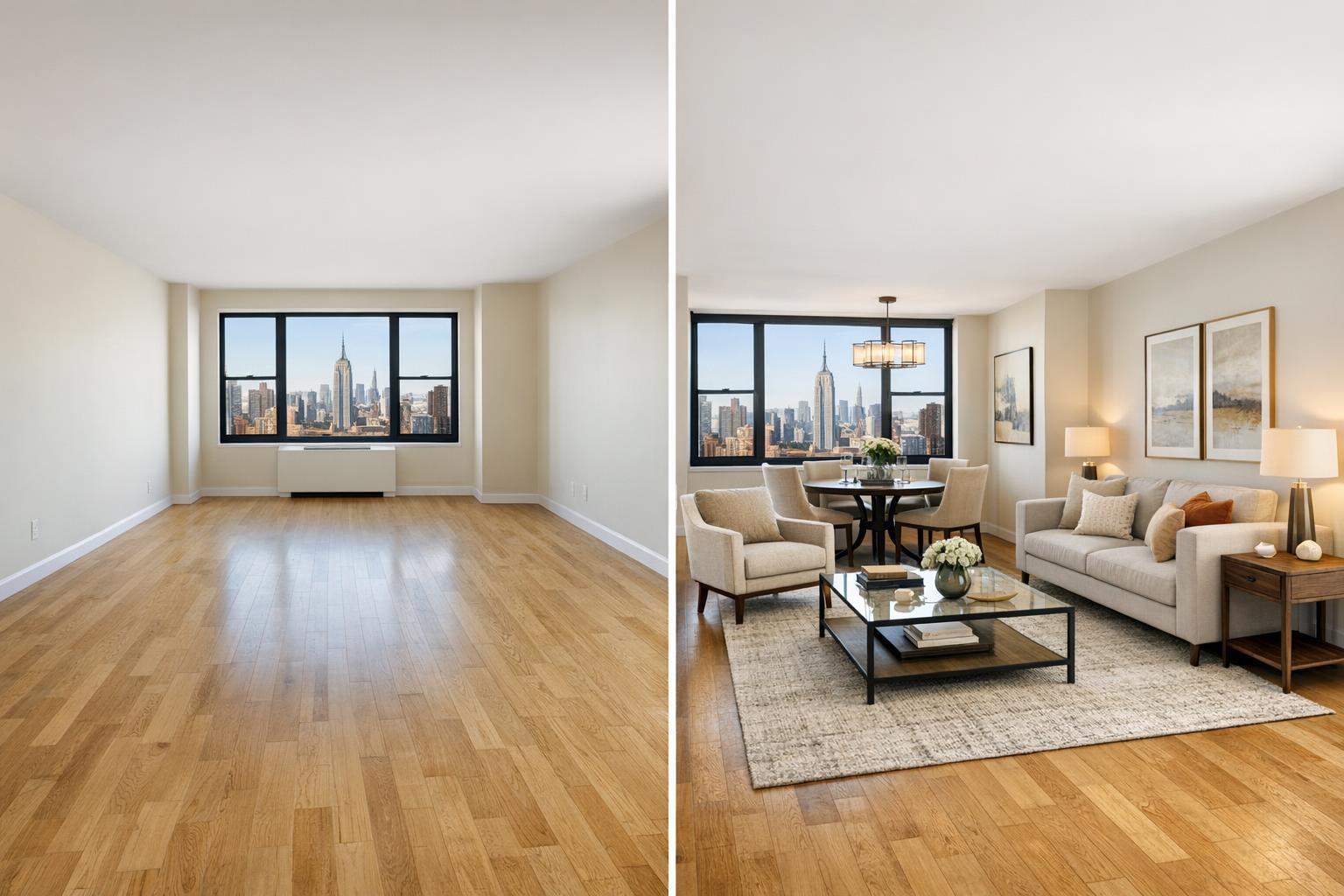
Vacant rooms can leave buyers guessing about scale and function. Virtual staging provides a digital glimpse of how a space might look when furnished, making it especially helpful for unoccupied properties.
Consider virtual staging if:
- The property is empty, newly renovated, or between tenants
- Photos of empty rooms feel cold or uninspiring
- You want buyers to visualize different furniture setups (living room, dining, office)
- The room’s dimensions or intended use aren’t obvious
Virtual staging works best on cleared-out rooms. If furniture or clutter is present, rooms should be physically emptied or digitally decluttered prior to staging. It’s a powerful tool to help buyers imagine living in the space—without trying to disguise real flaws or physically change the actual layout.
Practical Media Mixes for NYC and NJ Listings
Here are some sample approaches:
Manhattan Apartments and Condos
Professional photography is a must. Add a floor plan if the layout is unusual or the unit has more than one bedroom. Go with a 3D tour for premium listings or when you expect out-of-town buyers.
Brooklyn Brownstones
Combine great photography with a floor plan to clarify multiple levels and flow. Listing video adds appeal if the property layout or finishes are a major draw. Consider drone only if roof access and flight conditions make it practical.
Larger New Jersey Homes
Start with strong photography, a floor plan, and video walkthrough. Drone shots highlight property scale, pools, or unique landscaping where possible. Tailor the mix to the features you want buyers to see first.
Commercial Spaces
Photos document finishes, condition, and frontage. Floor plans or 3D tours help stakeholders or potential tenants visualize circulation and workspace functionality. Drone makes sense if the exterior, site placement, or parking is key.
Build a Media Plan That Answers Real Buyer Questions
In the end, the most effective real estate media is the set that makes the property clear, inviting, and well-understood. Don’t overwhelm your listing with every possible asset. Instead, start with professional photos, then add media that solves practical questions: floor plans for layout, video for flow, 3D tours for exploration, drone for setting, and virtual staging for empty spaces.
If you’re ready to prep a listing in NYC, New Jersey, or nearby, RealtaSnap helps agents select and book the mix of professional media that fits the property—no upselling, just clear guidance and efficient production.
Get started or see work samples at www.RealtaSnap.com.
FAQ
Question: Is a floor plan required for every listing?
Answer: No—floor plans are best for listings where layout and room relationships aren’t obvious from photography. Multi-bedroom, multi-level, or uniquely configured properties tend to benefit most, but a simple studio or straightforward one-bedroom may not need one unless it helps answer buyer questions.
Question: Can you create a 3D virtual tour or floor plan from photos or architectural plans?
Answer: These services require physical, on-site capture. Existing photos or floor plan sketches can’t provide the data needed for a 3D tour or an accurate, to-scale floor plan.
Question: Is drone photography available for every NYC or New Jersey property?
Answer: Drone feasibility is always determined on a case-by-case basis. Flights depend on airspace, safety, weather, roof access, and other factors. If you have a property in mind, RealtaSnap can advise on what’s possible after reviewing the location.
For more information and booking, visit www.RealtaSnap.com.