What Real Estate Media Services Does Your Listing Actually Need?
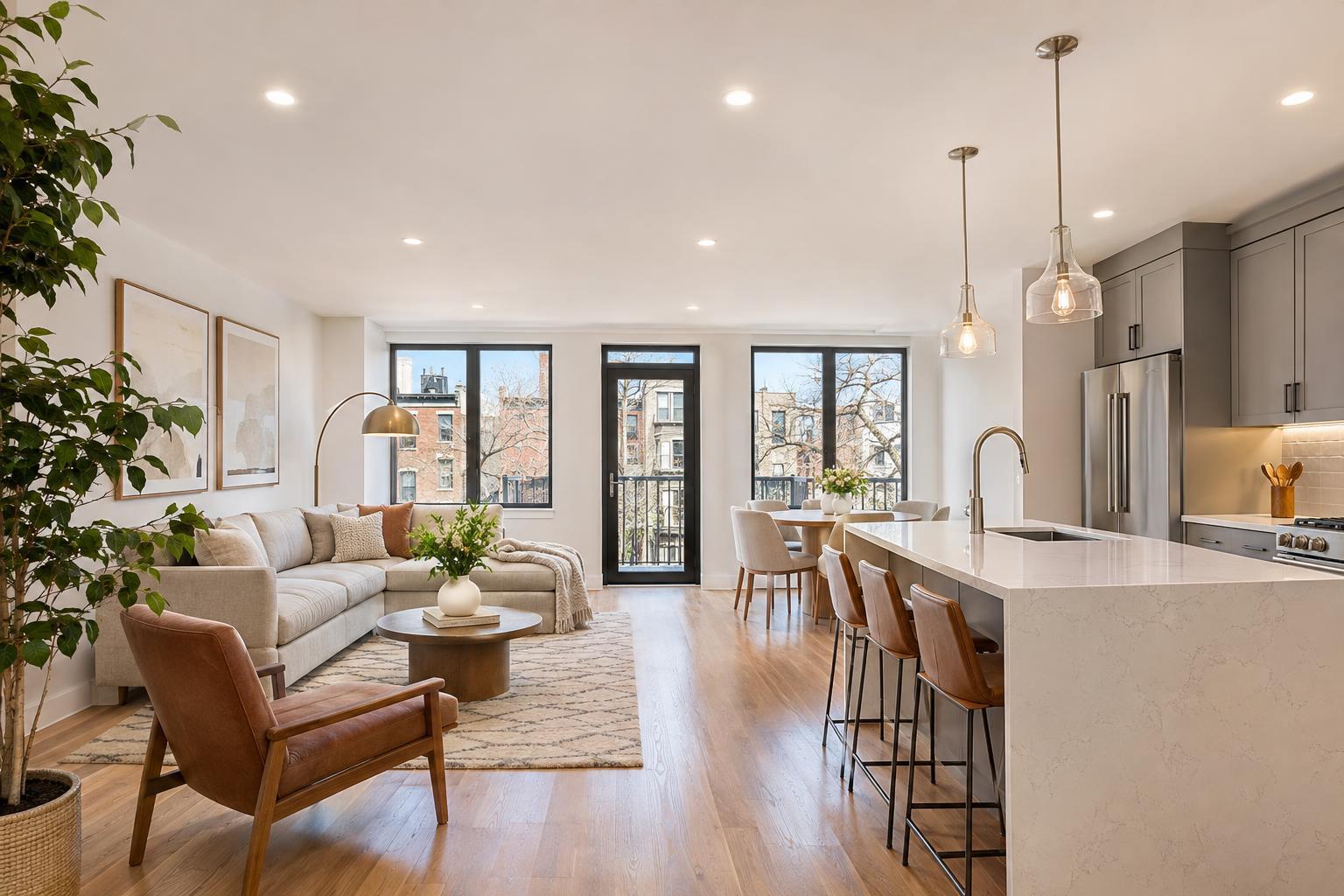
A spacious open-concept living room features a large sectional sofa and an adjacent modern kitchen equipped with a central island and bar stools, offering a blend of comfort and functionality in real estate media.

What Real Estate Media Services Does Your Listing Actually Need?
Real estate media play a crucial role in helping buyers, renters, and clients make sense of a property—beyond simply dressing up a listing with every possible add-on. Choosing the right combination of services is about clarity, not excess. Agents, brokers, owners, and property managers in New York City and New Jersey are often faced with a long list of available options. The real question is: which services will best help someone understand your specific listing before they schedule a showing?
Think Like a Buyer: What Needs to Be Understood?
Start by considering the aspects of your property that deserve the clearest spotlight. Is the layout unique? Does the apartment or house boast remarkable views, amenities, or outdoor space? Are you marketing to out-of-town buyers, investors, or strictly locals? Is the home furnished, empty, in pristine condition, or in need of some imagination?
A compact Manhattan co-op, a Brooklyn brownstone, a large New Jersey home, and a vacant new-development unit each present different communication challenges—and their ideal media mix shouldn’t be identical.
Ask Yourself:
- Is the layout straightforward or complicated?
- Are exterior features or the setting meaningful?
- Does the design or scale benefit from dynamic media like video?
- Will potential buyers or renters likely tour in person, or are they remote decision-makers?
- Are vacant rooms difficult to interpret without staging?
- Who is your audience—buyers, renters, investors, or commercial clients?
Why Photography Remains the Essential Starting Point
Listing photography is the foundation of effective real estate marketing. High-quality photographs provide buyers and renters with a clear first impression: the layout, finishes, natural light, and overall feeling of a property. Professional photos are also the most versatile media asset, ready for online listings, print, social media, and agent portfolios alike.
It’s not just about documenting each room; effective real estate photography blends composition, architectural alignment, balanced lighting, and natural editing to make spaces legible and inviting without overpromising or digitally altering reality.
When Photos Alone Are Enough
For some listings, quality photography might be all you need, such as:
- Simple, compact Manhattan or Jersey City apartments with straightforward layouts
- Rental units where showing the basic spaces quickly is the focus
- Condos where interiors matter more than exterior context
- Listings where strong finishes and views are the central selling point
A streamlined photo set—living area, kitchen, bedroom, bath, and any notable features—can often tell the story for a smaller or more conventional space.
Prepping the property for photography is equally important: declutter, maximize natural light, and define room functions. This prep helps both the photographer and your eventual audience.
Video: Movement That Tells a Story
A listing video offers something static images never can: a sense of flow. Walking from the entry to the parlor, up a staircase, or out to a roof terrace helps viewers experience movement, scale, and sequential space. Video shines when the flow, size, or architectural details are central to understanding the home.
Typical scenarios where video is especially effective:
- Brownstones, townhouses, and homes that span multiple floors
- Larger single-family residences where room-to-room connection is key
- Properties with striking outdoor spaces or water views
- New developments where amenities and communal areas are part of the appeal
- Listings targeting remote or relocating buyers
Keep in mind that video should be planned as an on-site production rather than a photo slideshow. For small, simple apartments, the budget for video might yield more impact if redirected toward floor plans or additional photography.
Floor Plans: Clarifying Spatial Relationships
Photos convey appearance, but floor plans demystify layout. They answer questions about where rooms sit relative to each other, how people move through the home, or what options exist for work-from-home or guest spaces.
A floor plan is particularly helpful when:
- The listing covers multiple levels (duplexes, townhouses, or brownstones)
- There are several bedrooms or flexible-use spaces
- The footprint is long, narrow, or otherwise unconventional
- Finished basements, attics, or accessory spaces are part of the mix
- Serious buyers are likely to compare dimensions before touring
For traditional brownstones, a floor plan clarifies how the parlor, bedroom floors, garden level, and outdoor space all connect—information that can be tough to gather from photos alone.
Importantly, RealtaSnap floor plans require physical access and must be captured on-site. They cannot be created remotely from PDFs, old architectural plans, or prior listings.
3D Tours: Invite Exploration from Anywhere
Interactive 3D virtual tours (such as Matterport or Zillow 3D) allow prospects to move at their own pace through a property. This is invaluable for out-of-town buyers, relocation clients, and anyone who prefers an in-depth online walk-through.
Common use cases:
- Brand-new development units
- Large, vacant rentals
- Homes likely to attract international or remote buyers
- Properties with enough complexity to benefit from more than a curated set of images
- Commercial spaces where remote decision-makers are narrowing down options
Virtual tours aren’t a must for every property—a small apartment can often be explained more than sufficiently with strong photography and a floor plan. But for spaces where independent exploration answers critical questions, 3D can be a valuable tool. Like floor plans, these tours require physical capture of the actual property.
Drone Imagery: Context from Above
Aerial photos and video can reveal lot size, setting, rooflines, proximity to parks or waterfront, and broader context unavailable from ground level. This is especially persuasive for:
- Suburban homes with acreage, pools, or wooded boundaries
- Properties by the water
- Homes where a sense of privacy or neighborhood relationship matters
In dense urban neighborhoods, drone flights are often less feasible due to building height, airspace regulations, and site access—but when possible, they offer a unique angle.
Drone work is assessed case by case, with feasibility depending on FAA rules, airspace, access, weather, and safety. Sometimes additional permits may be required.
Virtual Staging: Helping Viewers Imagine Possibilities
Empty rooms can be tricky; without real furniture, it’s hard to understand size and use. Virtual staging digitally adds furniture and decor to vacant spaces, helping buyers or renters envision how each area could function. It’s effective for:
- Vacant rentals or new-development units
- Recently renovated or empty homes
- Larger living spaces with ambiguous purpose
- Unfurnished properties that need a defined look
For best results, the room should be empty or fully decluttered prior to staging; digital furniture won’t convincingly cover existing pieces. If clutter removal is needed, RealtaSnap can provide this as a separate edit before staging.
Matching Media to Property: Four Practical Examples
Media needs are property-specific. Here’s how the right package can vary:
The Compact Manhattan Apartment
Essentials often include professional photos and, if there’s layout uncertainty, a floor plan. Video or virtual staging make sense when there is a dramatic view, custom finishes, or a vacant layout that’s hard to interpret.
The Brooklyn Brownstone
Multi-level brownstones benefit from a trio: detailed photography, video that tracks vertical movement, and a floor plan showing all levels and garden access. Drone views might be a plus if outdoor space or the neighborhood setting is part of the story.
The Larger New Jersey Home
Consider full interior/exterior photography, a floor plan, video for flow and outdoor living, a 3D tour for remote shoppers, and aerial coverage when lot or setting is a selling point.
The Vacant Rental or New-Development Unit
Photos are crucial, virtual staging brings empty rooms to life, floor plans explain layout, and a 3D tour adds depth for remote renters or buyers. Video is a bonus if amenities or flow are highlights.
Building Your Media Package: Focus on What Adds Clarity
There’s no universal checklist for every listing. Instead, construct your media plan around the property’s needs:
- Start with professional photography.
- Add a floor plan if layout is complex or hard to understand.
- Choose video when sequencing and movement will help the viewer.
- Consider a 3D tour for properties with remote interest or intricate layouts.
- Use drone media if the setting or aerial context is valuable and flights are feasible.
- Opt for virtual staging when empty or decluttered rooms need visual definition.
Ready to Plan Your Next Listing?
RealtaSnap works with agents, owners, managers, and brokers across NYC and New Jersey to put together listing packages that make sense—never one-size-fits-all. By coordinating photography, video, floor plans, 3D tours, drone coverage, and virtual staging as needed, you can make your next property easy to understand and visually compelling.
For more guidance on building your next listing package, visit RealtaSnap’s real estate media services or reach out for options tailored to your specific property.
FAQ
Question: Does every listing need a video, floor plan, and 3D tour?
Answer: Not necessarily. Simpler spaces—like small apartments or rentals—often benefit most from strong photos and perhaps a floor plan. Larger or more complex properties might justify video, 3D tours, or drone coverage. The right mix depends on what viewers need to know before they visit.
Question: Can I provide a PDF or old blueprints for a floor plan or virtual tour?
Answer: RealtaSnap creates floor plans and 3D tours through on-site capture of the actual property. Existing documents can be informative but do not replace physically photographing or scanning the space as it is.
Question: Can virtual staging be applied to furnished rooms?
Answer: Virtual staging is designed for empty or completely decluttered rooms. If furniture remains in the space, approved clutter-removal edits are required before staging can be applied.
If you need practical advice on media options for your next listing, RealtaSnap makes it easy to plan a coverage package that fits just right. See what’s possible at www.RealtaSnap.com.