Commercial Real Estate Photography: Boosting Property Value in NYC
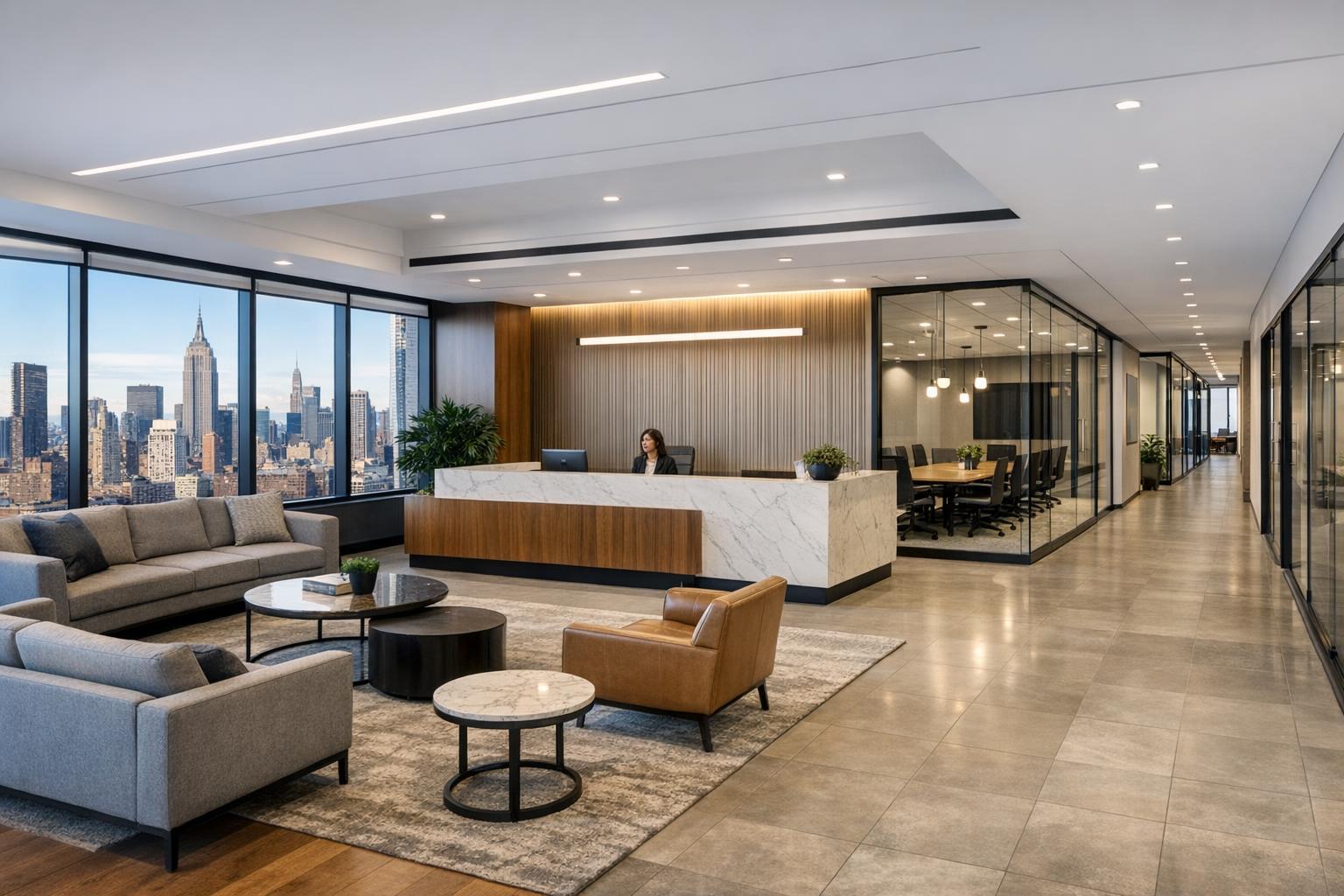
A modern office reception area with sleek furniture and expansive city views showcases premier commercial real estate photography.

Commercial Real Estate Photography: Boosting Property Value in NYC
In New York City, commercial real estate photography plays a leading role in how properties are seen and valued—well before a buyer, tenant, or investor sets foot inside. In a landscape packed with offices, retail storefronts, multifamily buildings, and unique development sites, the clarity of a listing’s visuals is far more than a finishing touch. Strong photography is often what inspires someone to click, enquire, and ultimately schedule a tour.
Why Images Matter More Than Ever
It’s easy to underestimate how hard it is to describe a New York City property in words alone. A quick paragraph can introduce the features—a loft in SoHo with towering ceilings, a Brooklyn retail space with corner visibility, a newly renovated lobby in a multifamily building. But visuals do the heavy lifting. The right photos give people a clear sense of scale, quality, light, finishes, and the unique character that written descriptions simply can’t match.
Great visuals aren’t just something nice to have. They:
- Help tenants picture how a space will function
- Give remote investors a genuine sense of value and potential
- Enable brokers to efficiently market and share materials
- Allow business owners to make fast, informed comparisons
- Showcase unique amenities, street presence, and building condition
Each of these audiences is after something slightly different, but the core requirement is the same: the property’s features need to be visible, and the flow and condition easy to evaluate at a glance. Well-composed property photography increases confidence and starts the marketing journey on solid ground.
How Quality Photography Translates Physical Value
While photography doesn’t alter the fundamentals—location, square footage, or lease terms—it does determine how quickly and clearly a property’s selling points emerge during the decision process. In the NYC commercial market, details like ceiling height, exposure, corridor width, and window placement are decision-makers for brokers, tenants, and investors. A skilled photographer knows how to capture these details if only for a few seconds of attention on a fast-moving platform.
Maintaining True Proportions
Wide-angle lenses and composition techniques in the right hands can show a lobby or conference room’s real scale, not an artificial stretch or cramped view. A clean shot of an office might include a main open workspace, with tight but accurate takes on meeting rooms, kitchens, and window walls—enough to help a remote viewer piece together the bigger picture without misrepresentation.
Getting the Lighting and Finishes Right
Natural daylight and NYC’s signature skyline views are prized features. However, exposure challenges abound—dark hallways, reflective surfaces, city-facing windows. Poorly handled shots lose the bright, airy feeling or render the city view as a solid glare. Great commercial photography balances window and interior detail, so both look natural. More importantly, honest editing avoids leaving prospects wondering if the space is different in person.
Visual Hierarchy: What Really Matters
Not every room deserves the spotlight in your listing gallery. For a restaurant, it’s the entrance, main dining room, and patio or roof—supported by a few details and private event zones. An industrial flex warehouse will prioritize its loading areas, ceiling clearance, and employee facilities. The purpose isn’t to show everything, but to curate a set that tells a cohesive story about the property’s strongest and most relevant features.
Visual Strategies, Tailored for NYC Commercial Properties
Marketing commercial real estate in the city is never “one size fits all.” An office suite in Midtown, a mixed-use building in Long Island City, and a storefront in Manhattan each present different challenges and opportunities. The most effective approach considers property type, audience, access, and how the images will be used.
Office Spaces: Letting Function and Flexibility Shine
Clear, uncluttered photos help tenants imagine their teams in the space—without distracting from the architecture. In occupied offices, a little staging goes a long way: clearing desks, straightening cords, removing temporary signs. Clients want to see open work areas, private offices, recessions, and where light hits throughout the day. A few minutes of tidying before the shoot can make a big difference when presenting across listing platforms and brochures.
Retail Properties: Don’t Ignore the Street
For retail, curb appeal and street context influence first impressions and foot traffic. A successful shoot covers the facade, signage, entrance, and a balanced look at the surrounding sidewalk activity. Time of day matters, too—a clutter-free, well-lit shot at the right hour is far more inviting than a busy afternoon featuring delivery trucks blocking the view.
Multifamily and Mixed-Use: Layers of Experience
With commercial multifamily marketing, blend exterior “establishing” shots with amenity images and unit highlights. The photos should clarify not just what spaces exist, but how residents and business tenants experience the building. Focus on stand-out amenities like a landscaped courtyard, fitness center, or a corner unit with a special view, so people can quickly identify what makes the property special.
New Development and Architectural Projects: Sweat the Details
Here, you often need even more care—balancing wide demonstration shots of the property with close-ups of materials, finishes, and design details. These are as useful for immediate leasing or sales as they are for portfolio use and future pitch decks.
Preparing Spaces for a Professional Shoot
You don’t have to turn a building into a showroom, but thoughtful prep makes a world of difference. Before your scheduled session, take these steps:
- Confirm access to all relevant areas
- Remove unnecessary clutter, boxes, signs, and visible trash
- Replace any burned-out light bulbs
- Clean glass, windows, mirrors, countertops, and visible surfaces
- Clear or organize desks in occupied offices
- Make restrooms and storage areas presentable if they're to be included
- Arrange access to lobby, elevators, rooftops, and amenities as needed
- Notify tenants or staff of the shoot timing to avoid surprises
- Discuss must-have shots with your photographer
A quick walkthrough before shooting helps ensure that only the best features make it into the gallery.
Evaluating a Commercial Property Photographer
Not all photographers approach commercial real estate the same way. When looking for a provider, consider:
- Their experience with similar property types—office, retail, industrial, hospitality
- Mastery of composition, lighting, and honest editing (not just dramatic effects)
- Comfort working in occupied, operational spaces
- Clear communication on what’s included in the service
- How extras—like floor plans, video, or 3D tours—are handled
- Ability to work around building protocols and scheduling needs
Don’t just go by looks in a portfolio; check whether the images convey space logically and truthfully. It’s worth asking how galleries are delivered and whether files are organized for real-world marketing use.
Expanding Your Media Mix Intentionally
Photography is still the backbone of property marketing, but options like video, 3D virtual tours, floor plans, virtual staging, and aerial drone coverage are increasingly common. Each serves a different purpose:
- Video for showing flow and movement, especially useful for larger office or hospitality layouts
- Floor plans for visualizing spatial relationships and layouts
- 3D virtual tours for remote, interactive viewing of spaces that benefit from walkthrough context
- Drone media (where allowed and feasible) for larger properties, rooftops, or locations where aerial context adds value
- Virtual staging for helping prospects imagine a furnished, move-in ready environment—best used in vacant spaces
Be thoughtful about which to add. Sometimes, a small retail space only needs concise, high-quality photos and a crisp exterior shot; at other times, a large development might justify a broader set.
Service-specific notes: floor plans, video, and 3D tours are created on site, not from PDFs or existing images. Drone flights require evaluation of airspace, weather, safety, and pilot discretion, especially in NYC’s dense environment.
Building Better Marketing Materials With RealtaSnap
If you’re listing a commercial property in NYC or New Jersey, working with a team that understands the regional market matters. RealtaSnap specializes in clean, consistent real estate photography and related media for commercial listings. The process is straightforward: properties are photographed on site, with the shoot and final product focused on real, present features.
Explore RealtaSnap’s NYC commercial property photography services for an overview of options, or start your project at www.RealtaSnap.com. For properties that may benefit from media beyond photography, RealtaSnap also offers on-site video, floor plans, 3D virtual tours, drone (where feasible), and AI virtual staging for eligible vacant spaces.
The strongest listing visuals aren’t about making a property look unrealistically perfect—they’re about presenting what’s there with clarity, honesty, and genuine appeal. When decision-makers can quickly recognize a property’s strengths, they’re far more likely to take the next step.
FAQ
Question: Can professional images actually increase the value of my commercial listing?
Answer: While photography itself doesn’t affect market value, effective images make key property features—such as natural light, build-out quality, and usable space—easier to see and assess. This helps attract more qualified attention during the marketing phase.
Question: Is it okay to photograph a commercial property while it’s occupied?
Answer: Yes, provided the shoot is scheduled thoughtfully and some light preparation is done. Clearing clutter, notifying staff or tenants, and ensuring access to key areas can help present the occupied space in its best light.
Question: Can every NYC commercial listing get drone photos?
Answer: Drone media may be possible for certain locations, but each request is evaluated case by case. Airspace restrictions, weather, safety, property access, and pilot discretion all play a role in what’s feasible.
Ready to present your commercial property at its best? Visit www.RealtaSnap.com to get started.