How to Choose a Commercial Real Estate Photographer for Your Property
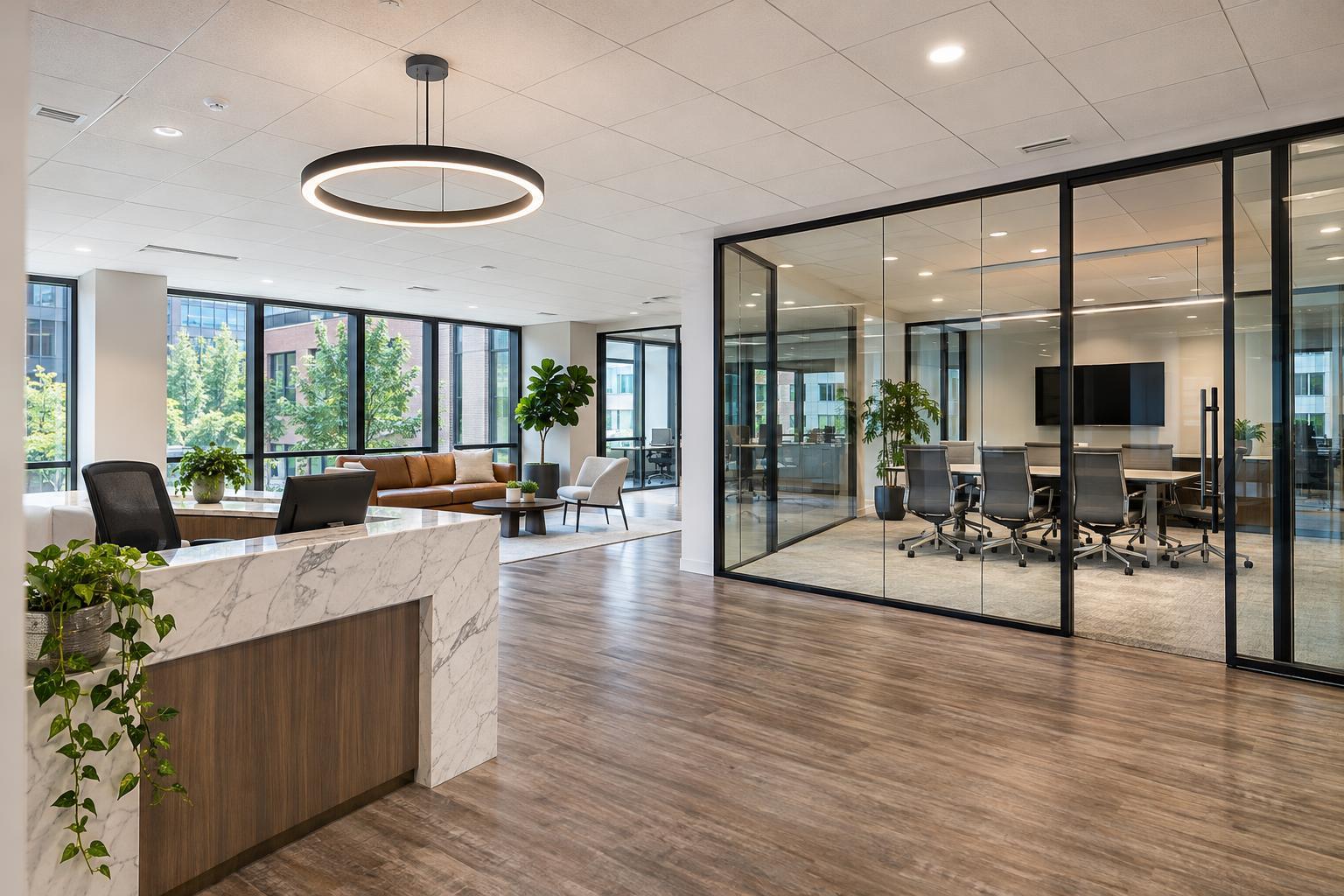
A commercial real estate photographer captures a modern, elegantly designed office space featuring an open reception area, a conference room with glass walls, and abundant natural light.

How to Choose a Commercial Real Estate Photographer for Your Property
Finding the right commercial real estate photographer for your property is about more than just getting attractive images. You need someone who can present a space so that potential tenants, buyers, investors, or decision-makers actually understand what sets it apart from everything else on the market. Especially in active hubs like NYC and New Jersey, commercial photography is a distinct skillset that’s quite different from shooting residential listings.
So, what really matters for a successful outcome—and what should you look for as you weigh your options? Here’s a straightforward guide for brokers, property managers, developers, and business owners looking for clarity.
Understanding the Property and Its Marketing Goals
Start by considering what your property actually needs to communicate. Before you even look at portfolios or get quotes, decide who your audience will be and what their priorities are. Is this set for a leasing brochure? An investor handout? A website for new development? Each use case will affect which images are most important.
For instance:
- Office marketing: Clear visuals of arrival areas, views, daylight, open workspaces, and common amenities.
- Retail promotions: Photos highlighting storefront exposure, foot traffic flow, interior merchandising areas, and sidewalk appeal.
- Industrial listings: Emphasis on loading access, yard area, clear heights, parking, and proximity to access roads.
The more context you can share about your audience and your marketing goal, the easier it is for your photographer to tailor their approach.
The Unique Demands of Commercial Property Photography
Residential real estate photography is generally about making a home feel inviting, but commercial real estate photography is fundamentally practical. Your audience needs to see the layout, functionality, and operational details, not just the aesthetics.
A commercial property photographer should deliver:
- Visual appeal: Clean, balanced images with true color and inviting atmosphere.
- Clarity of space: Visuals that capture circulation, dimensions, and spatial relationships.
- Practical details: Shots that demonstrate entrances, loading zones, parking, signage areas, and other features critical to decision makers.
- Brand consistency: Inclusion of notable amenities, materials, or branding elements that define your building’s market positioning.
- Accuracy: Honest representation—images should look like the real, walkable space, not a digitally enhanced version that sets up false expectations.
This matters even more in active, occupied environments where desks, merchandise, or staff are part of daily life.
Portfolio Review: Does Their Work Match Your Space?
A striking portfolio is good, but what you really want is evidence the photographer has successfully handled properties like yours. Ask to see similar categories—offices, retail, industrial, hospitality, or mixed-use projects.
Look for:
- Straight, natural architectural lines and perspective
- Interior images where daylight and window views are preserved
- Organized sequences through complex spaces
- Detailed shots that mix context (not just drama for drama’s sake)
- Consistency in editing style across diverse spaces
A Few Local Examples
- Manhattan office suite: Prospect wants to see the experience of arrival, light exposure, floor layout, and shared amenities. Wide shots set the scene; detail shots highlight pantry, glass conference rooms, or flexibility.
- Brooklyn retail storefront: Curb appeal, relationship to pedestrian traffic, window frontage, and street context matter. Interiors should make ceiling height, customer flow, and back-of-house space easy to read.
- North Jersey warehouse: Dock doors, yard access, ceiling clearance, office build-out, and approach routes should all be documented. An aerial image can be helpful but must be evaluated for feasibility.
Planning and Execution: How Will the Shoot Be Organized?
Commercial work often needs more prep. Before you lock in your photographer, ask about their process for getting familiar with the property, planning a shot list, and handling logistical hurdles.
Key planning questions:
- Which areas and features are truly essential?
- Will the space be occupied, vacant, staged, or under construction?
- Who’s handling building access—will management or a staff member be around?
- Are there security procedures or elevator rules to note?
- What time of day offers the best light or least foot traffic?
- Any zones off-limits to photography?
- Should staff, tenants, or branded materials be visible? Or removed?
- Are rooftop or mechanical spaces worth including?
A concise priority list can go a long way. When a property covers a lot of ground, the goal is to make sure the right spaces are documented first.
Editing Style: Honest, Consistent, and Marketing-Ready
Editing can make or break the impact of commercial images. You want photos that are bright and clean, but not so polished they feel fake. Watch for:
- Straight lines and natural perspectives
- Retained window views, even in mixed light
- Color accuracy across rooms
- Smart removal of temporary objects if needed (this should be arranged up front)
- Delivery of organized, high-resolution files
With RealtaSnap, property images are always captured on-site as the property exists. Retouching and object removal are available for distractions, but the core structure and materials are never digitally changed.
Supplementing Photography: When Is Additional Media Useful?
Still photography works for most marketing needs, but certain properties can benefit from:
- On-site video: Shows flow—walking from lobby to suite, moving through a showroom, etc. More effective than basic photo slideshows.
- Floor plans: Especially useful for offices or multi-room spaces. RealtaSnap’s floor plans are based on on-site capture, never redrawn from old PDFs.
- 3D virtual tours: Ideal for remote walkthroughs or when out-of-town prospects want a deeper look. Like floor plans, these require on-site scanning.
- Aerial images or video: Good for warehouses, standalone buildings, or large developments, pending local airspace and weather. Drone feasibility is determined individually for each address.
Getting Ready for Photo Day: The Logistics Checklist
Coordinating a commercial session is more involved than scheduling a quick home listing. Make sure to:
- Confirm who will provide access and keys (management, staff, or on-site rep)
- Notify building management if necessary
- Tidy common areas, remove excess signage, and position blinds for photos
- Turn on all lighting needed for the shoot
- Identify any security concerns up front
- Clarify who gets access to the final photo gallery and what files are needed for different uses
Comparing Providers: What to Ask Before You Book
Price is always a factor—but commercial projects often require more than the lowest quote and a set number of images. More meaningful points of comparison include:
- Have they photographed similar properties?
- How would they recommend structuring the session and shot plan?
- What’s the prep process, especially when spaces are occupied?
- Can they cover photography only, or will they handle video, floor plans, virtual tours, and aerials if needed?
- How are photos delivered and organized?
A capable provider will offer specific answers based on the property—not just a generic sales pitch.
Choosing a Photographer Who Gets Your Property
Every property has a story, but the most effective commercial real estate photography starts with real details and local context, not a cookie-cutter checklist. Whether you’re marketing an office, a bustling retail space, or a warehouse in the tristate area, the right photographer will focus on clarity, usability, and honest representation.
RealtaSnap provides in-person, property-focused photography and related media specifically for commercial spaces throughout NYC and New Jersey. If you need a team that understands the visual language of Manhattan offices, Brooklyn storefronts, or North Jersey industrial listings, you can see service information and book coverage at RealtaSnap’s website.
If you’d like to see examples or learn more about the options for your next project, just visit www.RealtaSnap.com.
FAQ
Question: How many photos do I need for a commercial property listing?
Answer: It depends on your property’s size, layout, and intended marketing use. Small spaces usually require key shots of important areas—storefront, main interior, service zones. For larger or multifloor sites, include a mix of wide overviews, operational details, exteriors, and situational views of important features.
Question: Should I photograph a commercial space while it’s in use?
Answer: Yes, this is common, especially in offices and retail properties. Try to schedule around busy times for less disruption, unless showing active use is part of your marketing plan. If people, signage, or temporary displays should be visible (or hidden), be clear with your photographer in advance.
Question: Can every commercial property use drone photography?
Answer: Not every address allows for drone flights—airspace, safety, local rules, and weather all affect what’s possible. Each property must be considered individually. RealtaSnap reviews the feasibility of aerial coverage case by case.
For straightforward, property-specific commercial photography in NYC or New Jersey, you can always start at www.RealtaSnap.com.