How to Choose a Commercial Real Estate Photographer in NYC and New Jersey
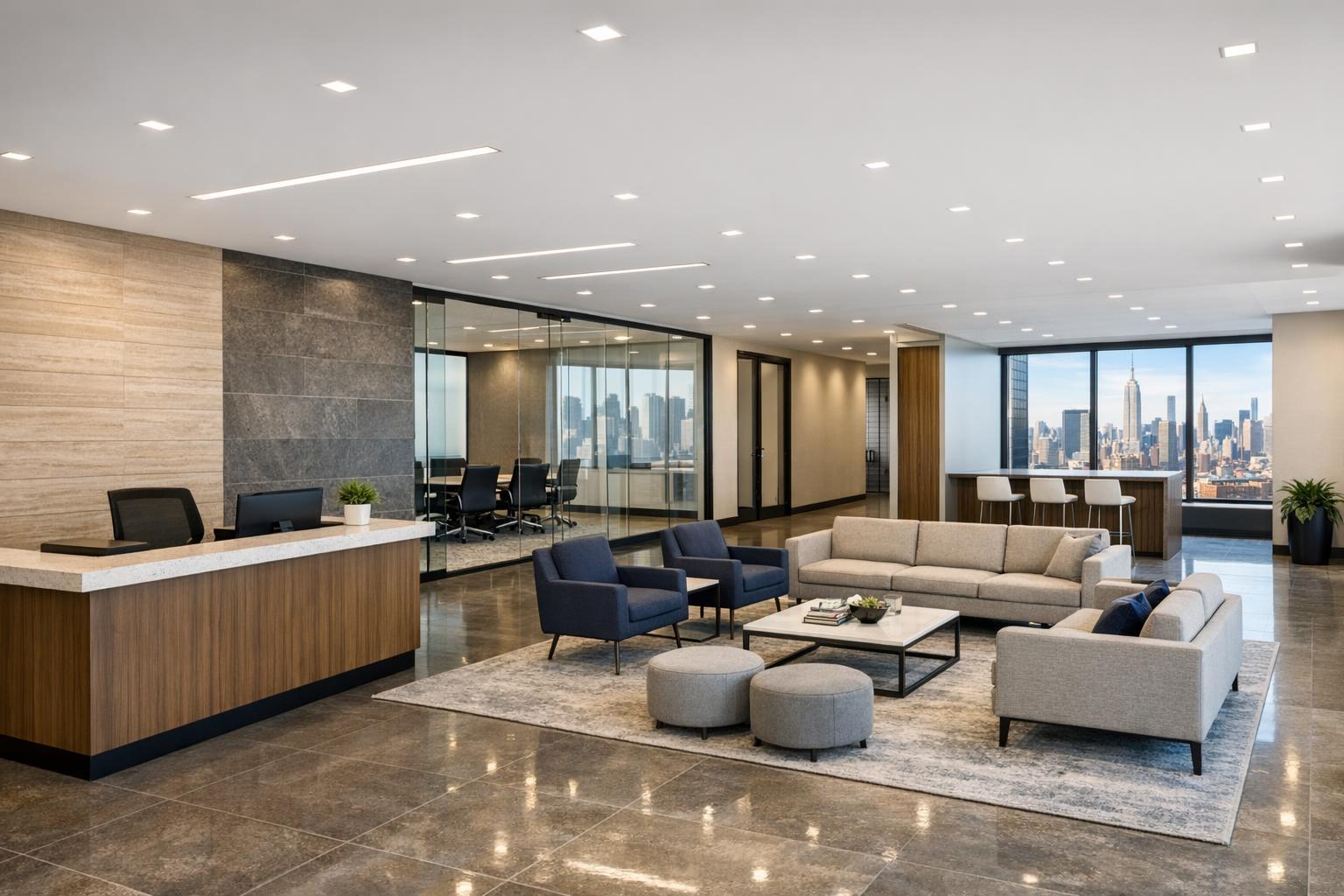
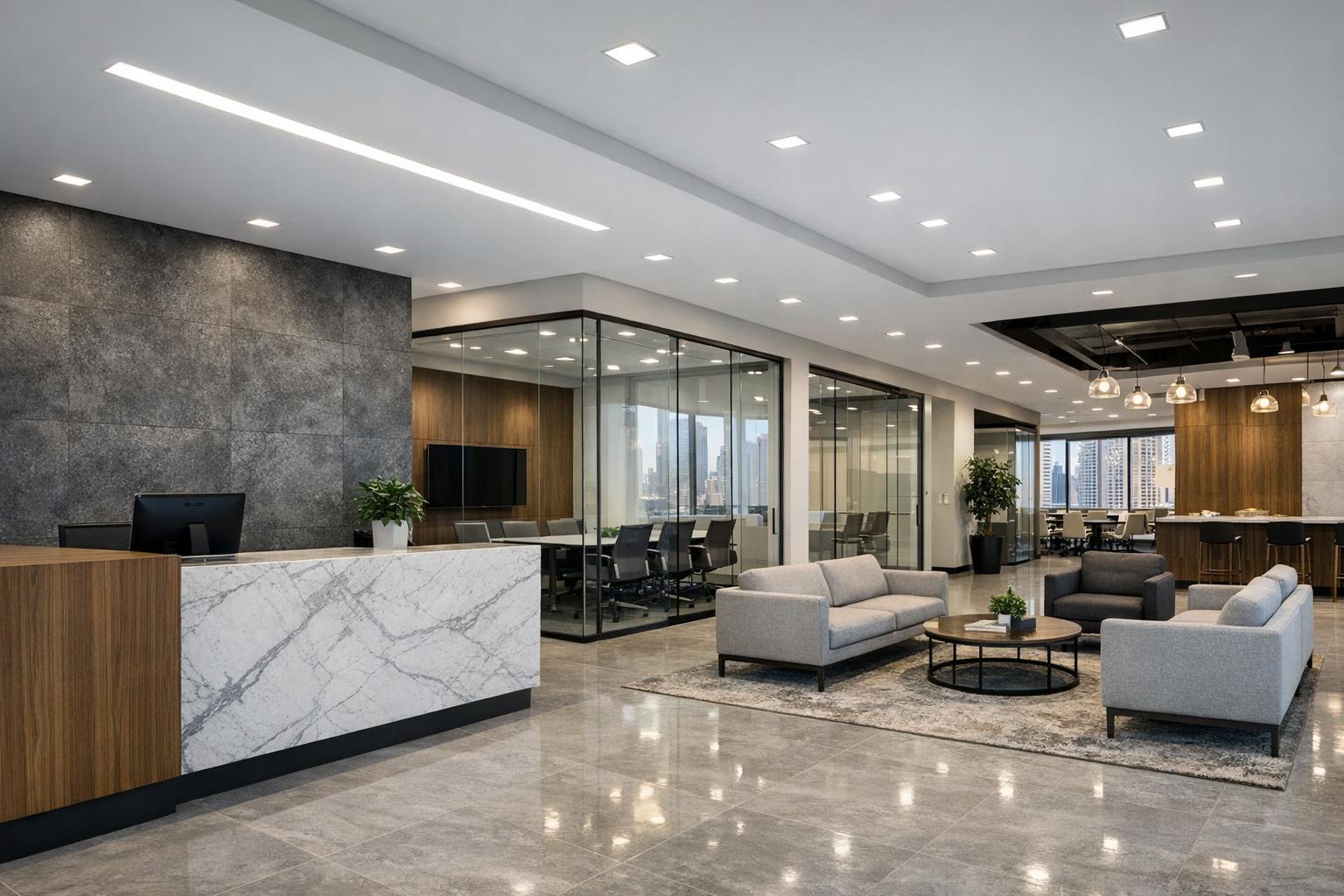
Captured by a commercial real estate photographer, a modern office lobby features sleek marble and wood accents, a comfortable seating area, and glass-enclosed conference rooms.

How to Choose a Commercial Real Estate Photographer in NYC and New Jersey
A commercial real estate photographer in NYC or New Jersey does much more than snap attractive pictures of empty spaces. For brokers, developers, property managers, and business owners, the right photographer makes it easier to communicate what makes a property relevant—whether that's operational flow in an office suite, the retail energy of a Brooklyn storefront, or the scale of a North Jersey warehouse.
But hiring the right professional is about more than finding someone who takes nice pictures. You want a photographer who anticipates the unique needs of commercial listings, understands local logistics, and can translate a physical space into clear, accurate, and strategic marketing visuals.
What Makes Commercial Photography Unique?
While residential photography tends to center on lifestyle, comfort, and that elusive homey vibe, commercial real estate photography has its own priorities. Here, images need to answer very different questions:
- How is the space configured and what are its core features?
- What can prospective tenants, investors, or decision makers expect for natural light, building condition, and access?
- Does the imagery clarify the relationship between public and private spaces—or between customer-facing, operational, and support areas?
- How does the property fit into its street, neighborhood, or larger complex?
Shooting commercial spaces often means prioritizing function and clarity over simply making a room look pretty. It could mean highlighting ceiling height and loading docks in a warehouse, or showing how signage will face the sidewalk for a retail space. The emphasis is always on communicating how a property works, not just how it looks.
Defining Your Marketing Goals Up Front
Before you even review photographer portfolios, take a moment to clarify why you’re hiring commercial real estate photography services in the first place. Will the photos be used for a leasing brochure? An offering memorandum? Construction progress updates? Investor decks? Social media? Every scenario shapes your requirements.
For instance:
- Office listings often need to show reception, conference rooms, workstations, private offices, amenities, and views.
- Retail spaces should showcase visibility, signage opportunities, foot traffic, and customer flow.
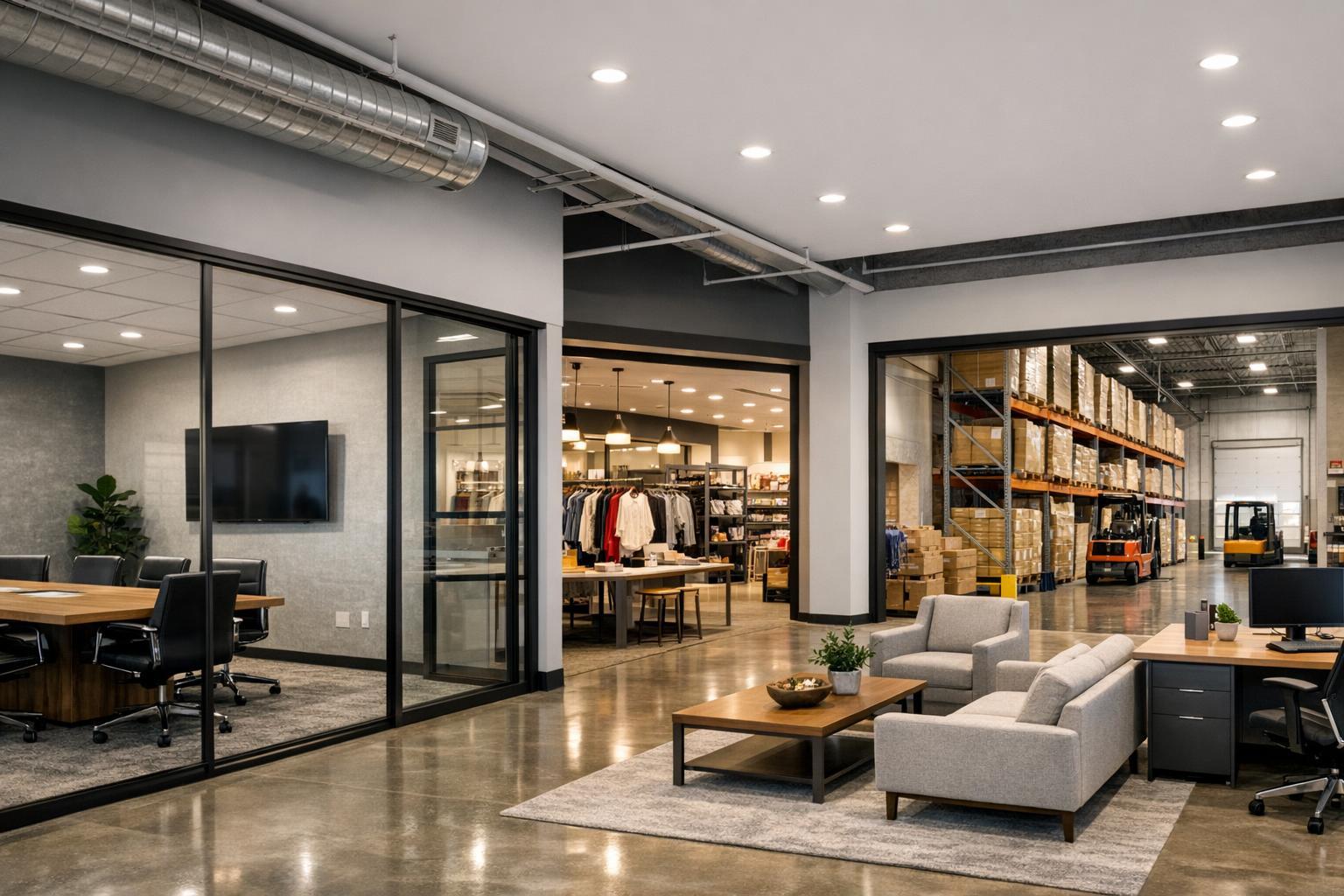
- Warehouses and flex spaces benefit from images of loading access, racking, open bays, parking, and circulation.
- Development projects may call for documentation of construction milestones, materials, and evolving amenities.
- Mixed-use properties often demand a separate visual story for each component—from the retail ground floor to residential entries and building context.
When you share these priorities with a photographer, you’re far more likely to get images that serve your real marketing needs. A good provider will start by asking about your audience and end use, not just rattling off a standard shot list.
What to Look for in a Commercial Property Photographer
Does Their Portfolio Match Your Property Type?
Portfolios are great for showing skill—but pay close attention to whether the photographer has shot properties that look like yours. Do their examples include the types of spaces, sizes, or conditions that line up with your assignment? Look for diversity: a great commercial photographer should handle anything from polished lobbies and open office plans to gritty loading docks and utility corridors.
Can They Handle the Realities of Commercial Spaces?
Commercial interiors present unique challenges: long sight lines, glass partitions, mixed lighting, reflective surfaces, and operational clutter. Look for consistent technique. Vertical lines should be straight, natural light shouldn’t overwhelm, and operational areas—like kitchens, labs, or restrooms—should still look accurate and useful.
A quality set won’t just have one dramatic “hero” image. You want clear, well-composed photos throughout, from lobby to mechanical room, for both marketing polish and honest context.
Do They Plan Around NYC and New Jersey Logistics?
In Manhattan and the outer boroughs, access logistics can get complicated: freight elevators, loading rules, security desks, and scheduled building access all affect timing. In New Jersey, you’ll often have longer walks between buildings, variable tenant schedules, and a more diverse building stock. The best photographers are prepared to coordinate with onsite contacts, navigate restrictions, and capture a property’s highlights under real-world conditions.
Smart Questions to Settle Beforehand
- Who will meet the photographer and provide access?
- What areas require advance notice, certificates, or special approval?
- Will the property be vacant, occupied, or under construction/renovation?
- Is there any clutter or confidential material to remove before the shoot?
- Are there restrictions on exterior, rooftop, or drone photos?
A bit of preparation—like turning on lights, clearing a lobby, or scheduling around cleaning crews—results in much more usable images.
How the Best Photographers Adapt to Property Type
Offices
Good office photography balances both design and usability. Reception, conference rooms, collaborative areas, kitchens or pantries, and exterior views are all fair game. If photographed while occupied, coordinating with staff about privacy and clearing screens or confidential papers makes for a cleaner result.
Retail and Storefronts
Retail listings need both the “outside in” and “inside out” story: how a storefront presents to the street, its signage, day and night views, window displays, and the flow from entrance to checkout. Interior photos should clarify depth, layout, back-of-house features, and adaptable space.
Warehouses and Industrial
Here, the focus is function. You want clear shots of loading docks, ceiling heights, storage areas, office buildouts, yard and parking, and site access. The goal is to make scale and logistics understandable at a glance, even for people evaluating the space remotely.
Development and Mixed-Use
Developments evolve from dirt lots to completed buildings. Early-phase shoots document construction progress and materials; finished projects need shots of amenities, architectural details, and each component (retail, residential, amenities) handled with equal care.
The Role of Editing: Enhance Without Misleading
Quality commercial photography services include editing—but the point is clarity, not deception. Correction of exposure, color balance, and vertical lines helps a space look true-to-life. Edits should never misrepresent scale, condition, or features.
In some cases, virtual staging can help show possibilities for a vacant room. It’s best used in empty spaces, using furniture layouts that match the property’s intended use. For partially furnished or cluttered spaces, some cleanup may be necessary before staging can be applied.
Do You Need More Than Still Photos?
Photography is almost always the backbone of a commercial listing. But sometimes, you’ll want to give prospects another way to engage:
- Video tours show how people move through a property, with a real sense of arrival and flow.
- Floor plans make complex layouts easier to understand.
- 3D virtual tours (like Matterport) offer remote viewers an interactive way to explore.
- Drone imagery reveals access points, parking, nearby infrastructure, and true site context. (Flights are subject to rules, airspace, weather, and, of course, pilot discretion.)
- Virtual staging can display a tailored, furnished presentation for empty spaces.
The mix depends on the specific property and audience. For example, an office sublease might only need strong photos and a floor plan, while a warehouse redevelopment could benefit from drone context and a video walkthrough.
Price Isn’t the Only Comparison Point
Rates matter, especially for larger or multi-day commercial projects. Still, shopping purely by price rarely gets the best outcome. A strong photographer will ask the right questions up front, plan for tricky site access or schedules, and actively collaborate to achieve your marketing goals.
As you compare providers, ask:
- Have you shot similar properties?
- How do you plan your coverage and shot list?
- What do you recommend to prepare the space?
- Can you handle occupied or operational spaces?
- Are add-ons like video, floor plans, drone, or 3D tours available?
- How are complex or multi-stage projects managed?
Confident, specific answers mean you’re in good hands.
RealtaSnap: A Practical Choice for NYC and New Jersey Commercial Properties
RealtaSnap offers commercial real estate photography, video, drone services, floor plans, 3D tours, and virtual staging for projects throughout New York City and New Jersey. Each assignment begins with a practical conversation about the property’s purpose, audience, and onsite logistics. You can book standard shoots or request a quote for complex commercial projects directly through RealtaSnap’s booking site.
Whether you’re marketing an office, retail space, industrial building, or mixed-use development, effective images start with clear planning and real local expertise. For samples of work or more information about relevant services, visit the main RealtaSnap website.
FAQ
Question: What should I clear or prep at a property before a commercial shoot?
Answer: Remove visible clutter, secure confidential materials, and make sure all planned rooms are accessible. Turning on lights and checking for any temporary items (like boxes or signage) improves the final result, but you don’t have to stage every room to perfection.
Question: Is it possible to schedule a shoot for an occupied office or retail business?
Answer: Yes, but it’s wise to coordinate timing for low-traffic hours, and to plan around privacy, sensitive areas, and business operations. Early mornings, after hours, or scheduled gaps in activity are often best.
Question: When would I add extras like a video walk-through or drone imagery?
Answer: Consider extra media when it helps answer viewer questions about the property. Video is useful for showing flow; drone imagery is great for exterior context (when permitted); 3D tours and floor plans can help with remote or complex spaces.
If you have questions about booking or want to discuss a specific project, you can always start with a conversation. Visit www.RealtaSnap.com.