How to Choose a Brooklyn Real Estate Photographer for Your Next Listing
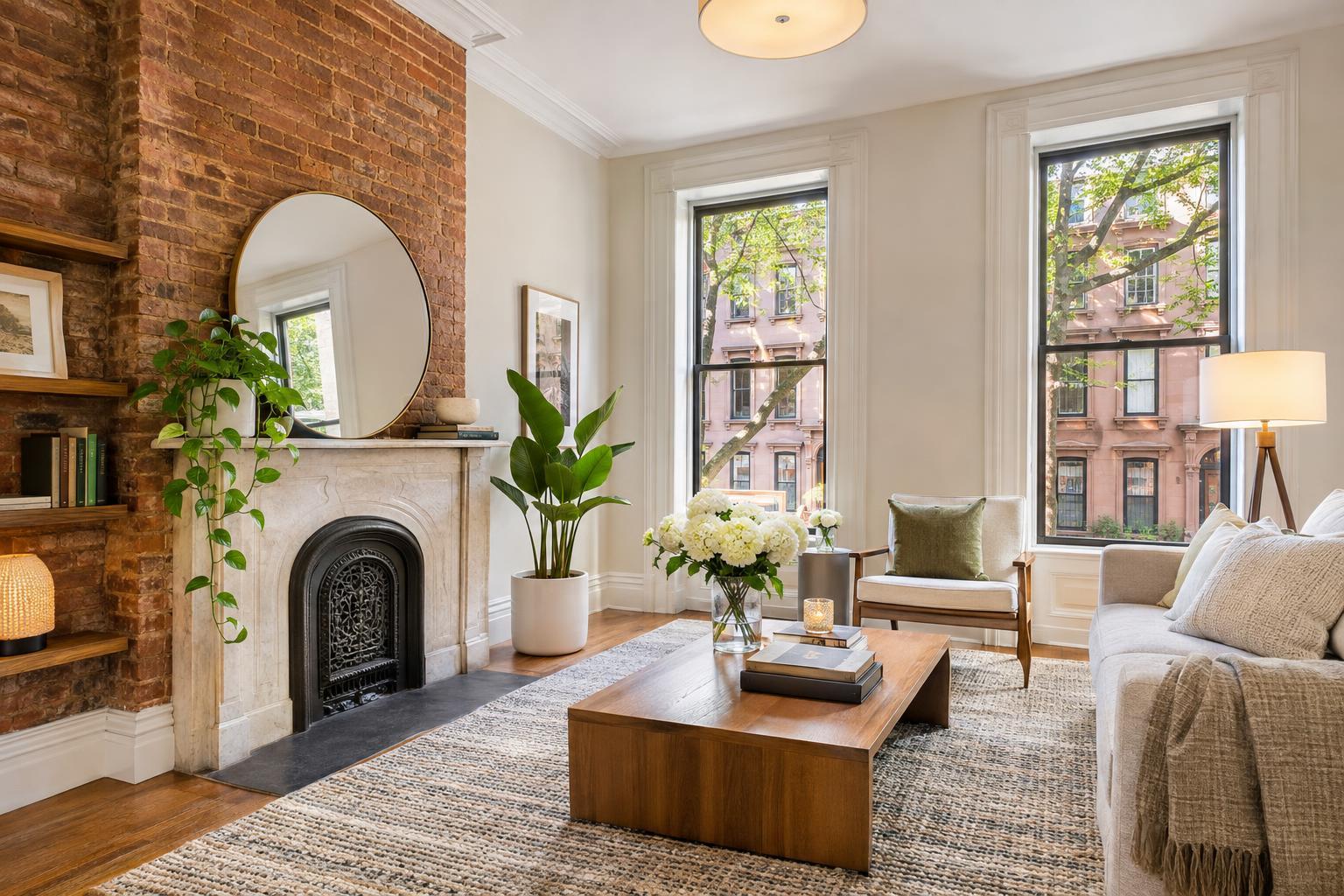
A beautifully staged living room with exposed brick, a cozy fireplace, and large windows showcasing classic Brooklyn architecture captured by a real estate photographer.

How to Choose a Brooklyn Real Estate Photographer for Your Next Listing
Finding the right Brooklyn real estate photographer is about much more than picking someone with a fancy-looking website or a few impressive shots. For brokers, agents, and property owners getting ready to hit the market, an effective photographer is a partner who truly understands Brooklyn’s range of spaces, has a practical plan for building logistics, and produces images that tell the story of your listing—before a single showing is scheduled.
In a borough spanning pre-war co-ops, new development condos, historic brownstones, and one-of-a-kind townhouses, real estate photography in Brooklyn needs to do more than follow a formula. Every property has its own layout, quirks, and lighting conditions. A photographer who brings the same routine to every address might get the job done, but often misses the details that set a listing apart.
Below, you’ll find tips for evaluating photographers, insights on building types and shoot prep, and advice on when to bring in extras like floor plans, video, or virtual staging. Whether you’ve got a sun-filled top-floor walkup or a spacious brownstone with a garden, these guidelines can help you make an informed call.
Portfolio or Reality? What Matters When Comparing Photographers
Looking through portfolios is a logical first step. Clean, balanced, and detailed images tell you a lot about a photographer’s capabilities. But remember—every portfolio is curated to show spaces at their very best.
When choosing someone for your next Brooklyn listing, it helps to dig deeper. Consider:
- Do their galleries include both cozy apartments and larger homes?
- Can you spot consistent editing style and true-to-life color?
- Are window views believable, not blown out or artificially darkened?
- Do you see straight vertical lines (especially in doorways and facades) or do perspectives look off?
- Is the actual layout and flow of each home clear, or are photos more about drama than accuracy?
The goal isn’t to make a compact studio look like a loft, or flatten the character out of a historic brownstone. Listing photography should feel bright, organized, and honest—so buyers and renters understand what’s really there.
Local Expertise: Brooklyn’s Unique Property Landscape
Brooklyn properties aren’t one-size-fits-all. Apartments, condos, brownstones, and townhouses each present their own practical and visual challenges. Here’s why experience with Brooklyn listings really matters.
Brooklyn Apartments & Co-ops
Small rooms, shifting daylight, and tight layouts are just the start. A skilled Brooklyn listing photographer knows when to use a wide angle—and when to hold back. Too much exaggeration in a small space makes it look confusing or misleading. You want photos that show flow and function, not a maze.
Apartment buildings may also have extra hurdles: elevator timing, doorman protocols, building rules, restricted shooting hours, and lobby restrictions. A top-notch photographer will clarify these issues up front, so there are no surprises.
Condos & New Developments
These properties often highlight unique features—corner glass, built-in storage, private terraces, amenity spaces, and designer kitchens. A thoughtful photographer prioritizes what makes each unit different, not just “selling the sizzle.”
If amenities like gyms or lounges should be included, find out early if management approval is needed to capture those spaces.
Brownstones & Townhouses
Shooting multi-floor homes calls for extra planning. Narrow stairs, older details, parlor floors, fireplaces, gardens, and roof decks can all play a part. Here, photos should help buyers visualize how the home unfolds, not just serve up a series of disconnected rooms.
The shoot often works best by starting with the front and exterior, then moving through the main living areas, followed by bedrooms, garden spaces, and lower-level rooms.
Renovated & Pre-War Spaces
Balancing original character with renovations is a real art. Pre-war homes might have heavy trim, high ceilings, and unusual layouts—sometimes with rooms varying widely in natural light. The aim should always be to highlight what’s special, not bury it with excessive retouching or generic angles.
Photography Details That Really Count
Great listing photography isn’t only about brightness or style. A few technical details make a real difference:
- Straight Lines: Look for shots where walls, doors, cabinets, and window frames are truly vertical. Crooked lines jump out in Brooklyn’s classic brownstones and modern apartments alike.
- Room Proportions: Wide lenses should be used carefully. It’s tempting to make a room look huge, but exaggerated results hurt buyer trust. You want rooms to look understandable, true to their shape—and not distorted.
- Balanced Window Exposure: Brooklyn properties come with all kinds of window scenarios. The best shots keep both the room and the view believable, rather than letting windows “blow out” or be artificially darkened.
Consistency Is Key: Not Just One Great Shot
It’s easy to be wowed by a hero image. But what really matters is the overall gallery. Buyers, renters, and landlords scroll fast—so consistency helps a listing feel professional and trustworthy.
When reviewing a photographer’s work, watch for:
- Uniform color and brightness from shot to shot
- Straight lines and solid perspectives throughout
- Logical, clear sense of the home’s layout
- Reasonable handling of tricky mirrors or reflective surfaces
- Weather and time of day matched sensibly in exterior images
When editing is overdone or inconsistent, it can make the listing feel patchy or send up red flags.
Preparing for Your Shoot: Small Steps, Big Impact
No matter how talented your photographer, prepping the property is a major factor in how the final shots turn out. Preparation doesn’t mean making the place look empty—it means removing distractions so features and natural light stand out.
A helpful photographer or Brooklyn listing media partner should provide prep guidance and confirm logistics in advance. Most listings benefit from:
- Clearing kitchen and bathroom surfaces
- Removing personal photos and unnecessary decor
- Tucking away pet items and power cords
- Opening blinds for more light (when appropriate)
- Making beds and tidying pillows
- Clearing hallways and paths
- Removing vehicles or bins from outside areas if possible
Occupied spaces might need an honest discussion about what can be moved or temporarily stored. Furniture helps establish scale, but clutter or excess belongings rarely do the property any favors.
Coordinating Access and Timing Around Building Realities
Brooklyn’s varied housing stock comes with plenty of logistical considerations. A smooth shoot depends on sharing key info before the day arrives:
- Building access info—doorman, keys, lockboxes
- Whether the elevator must be reserved or if freight is required
- Any restrictions about shooting in common spaces or amenities
- Tenant schedules, pets, renovations, or construction in the building
- Exterior access concerns (roof, garden, alley, etc.)
Picking the best photo time isn’t only about “golden hour.” It’s a balance between natural light, building access hours, occupant schedule, and agent availability. Good communication here saves time and helps set expectations on both sides.
RealtaSnap, for example, lets you choose property address, select your services, add access details, and pick from real-time available slots—typically with at least 24 hours’ notice for standard sessions. Schedule and view options.
How Many Photos Does Your Brooklyn Listing Really Need?
It’s not always true that more is better. A small apartment might only need a dozen focused images to show off living areas, bedrooms, bathroom(s), and special features. Larger homes or multi-level listings warrant broader coverage to capture outdoor spaces, architectural character, and unique amenities.
A thoughtfully planned gallery avoids two common pitfalls:
- Too few images, leaving important spaces unexplained
- Overload of similar angles, making the listing confusing to viewers
RealtaSnap offers packages from 10 to 50 photos, so you’re not locked into a cookie-cutter approach.
When to Consider Floor Plans, Video, 3D Tours, Drone, or Virtual Staging
Photos are still the foundation of real estate marketing, but certain listings benefit from additional visual assets.
- Floor plans: Useful for homes with unusual layouts, multiple levels, or spaces where photos alone can’t explain the flow. These require a photographer physically on site to capture.
- Video: Well-executed listing videos can show movement and transitions—helpful for properties with a dramatic entrance, multiple floors, or unique outdoor space. Videos should be filmed on site, not pieced together from still shots.
- Virtual tours (Matterport): Offering a walk-through-style experience, these interactive scans work best for listings with complex layouts or buyers who may be touring remotely. On-site capture is required for an accurate tour.
- Drone imagery: Aerial photos or video may add context, especially for homes near parks, waterfronts, or with roof access. Drone flights depend on airspace, weather, safety, pilot discretion, and building access.
- Virtual staging: For vacant homes, showing one possible furniture arrangement helps buyers imagine living there. Best results come when rooms are empty and clean—clutter has to be removed beforehand.
Questions to Ask Before Booking
A short, clear conversation upfront helps avoid misunderstandings. Consider raising questions like:
- Have you photographed spaces similar to this one?
- How do you approach mixed lighting or tricky windows?
- What prep needs to be done by the owner, tenant, or agent?
- Which access info do you need before the shoot?
- How many images will fit this listing?
- What’s the turnaround for finished assets?
- Can I add video, floor plan, or 3D tour if needed?
- Are there limits for amenities, occupied spaces, or exteriors?
Well-worded answers signal professionalism and an organized workflow.
A Straightforward Brooklyn Photography Partner
A skilled real estate photographer should simplify the process, not make it more tedious. Look for a partner who respects the actual proportions of your property, communicates clearly, navigates logistical hurdles, and delivers consistent results.
RealtaSnap specializes in real estate photography and media for Brooklyn and beyond, with on-site capture and easy online scheduling. Check out options or book your next shoot at www.RealtaSnap.com.
FAQ
Question: How much notice do I need to book a Brooklyn real estate photographer?
Answer: It's a good idea to book as soon as you know your listing timeline, especially if the property requires access coordination or prep. RealtaSnap generally asks for at least 24 hours' notice, and all available appointment times are listed in real time when you schedule online.
Question: Does an occupied apartment need to be empty for listing photos?
Answer: Not at all. In fact, well-arranged furniture helps show scale and flow. What's important is that the space is tidy and accessible. Before the shoot, it’s helpful to discuss whether certain items should be moved or put away.
Question: Is it worthwhile to add a floor plan to my Brooklyn listing?
Answer: Floor plans are especially helpful for listings with multiple levels, irregular layouts, or unique room arrangements that might not come across clearly in photos. RealtaSnap creates floor plans based on on-site capture for accuracy.