What to Look for in Commercial Real Estate Photography
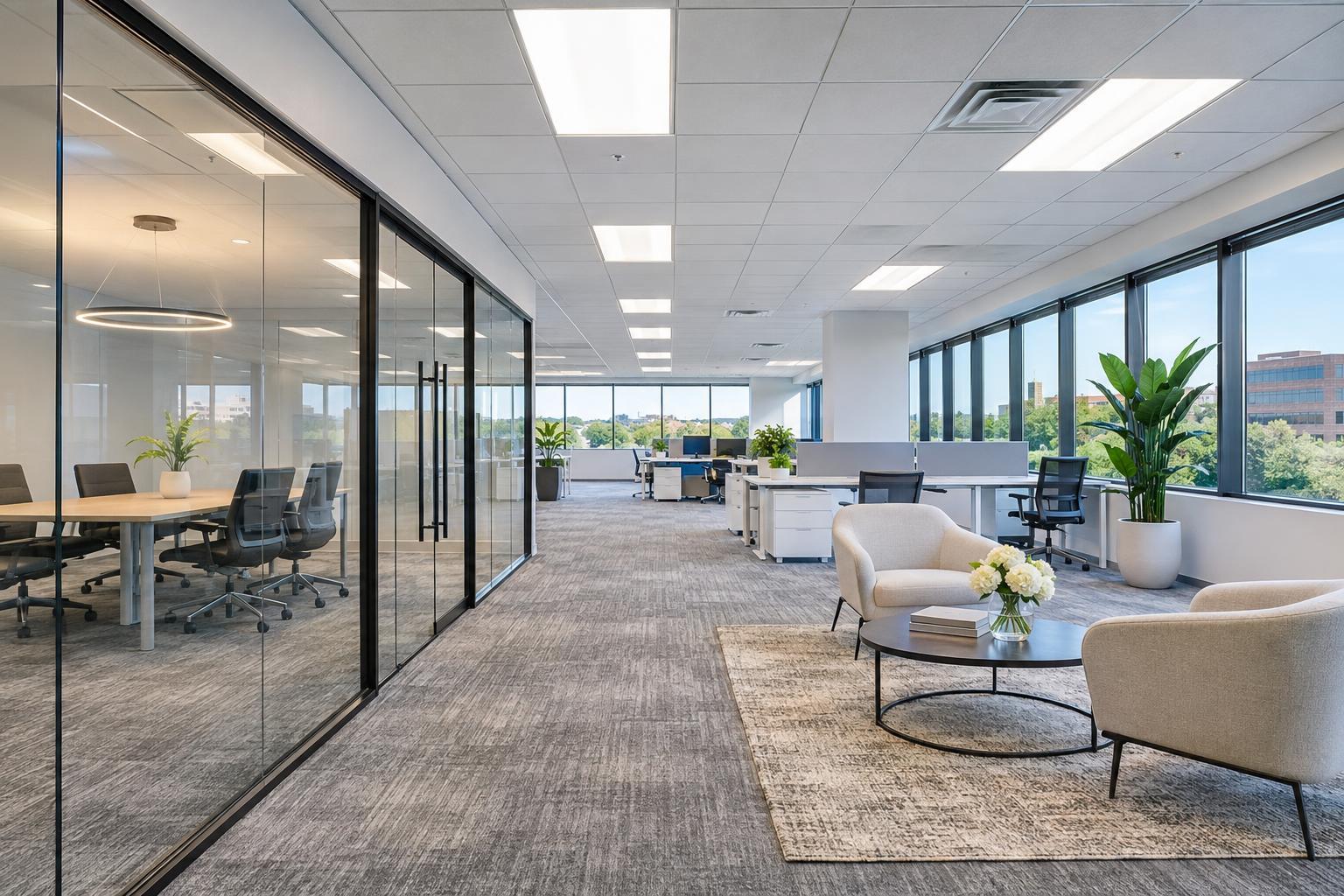
A modern office space with large glass-walled meeting rooms, open workstations, and stylish seating areas is accented by natural light from expansive windows.

What to Look for in Commercial Real Estate Photography
Commercial real estate photography in NYC and New Jersey is about more than just making a property look attractive. For brokers, landlords, developers, and business owners, high-quality images are a vital tool to help prospective tenants, buyers, and investors quickly assess whether a space meets their needs. It’s a photographic discipline grounded in clarity, accuracy, and a strong understanding of how commercial spaces are marketed.
The Real Purpose of Commercial Property Photography
A great set of commercial images answers practical questions. Beyond curb appeal, decision-makers want to see exactly what they’re getting: scale, access, layout, finishes, natural light, street presence, and operational features. If the photos can’t communicate how a building supports its intended use—whether office, retail, industrial, or mixed-use—the listing will struggle to get serious attention.
When reviewing a photographer’s previous work, go beyond surface-level polish. It’s important to assess whether they can plan an organized shoot that fits around a functioning building’s operations. The most effective commercial property photographers capture images that are true to the property and genuinely support the marketing objective.
What Commercial Photos Have to Show (and Why)
The characteristics prioritized in commercial real estate photography tend to be different from those in residential listings. Instead of helping someone imagine living in a space, the goal is to make it easy for business stakeholders to evaluate whether the property fits their operational and branding needs. Depending on the specific assignment, the image set should thoughtfully include:
- Exterior views, street presence, and signage opportunities
- Main entrances, lobbies, and reception areas
- Room dimensions, ceiling heights, and circulation routes
- Window lines, natural light, and exterior views
- Access points: elevators, stairwells, loading areas
- Architecture details, finishes, and fixtures
- Parking, adjacent streets, and overall site context
- Specialized operational features (e.g., loading docks, kitchens, lab areas)
The right photography plan always starts with an understanding of why the property is being marketed and who will be evaluating it. A creative office suite, empty medical condo, busy storefront, or sprawling warehouse each calls for distinct visual priorities.
How Commercial Differs from Residential Photography
Unlike residential shoots, which often lean on mood and staging, commercial shoots need to balance aesthetic appeal with accurate representation. Commercial property photos must provide enough context for someone to understand the layout and suitability of a space quickly. Good composition and lighting are still important, but an honest depiction of the property is non-negotiable.
For example, in a retail environment, images should make signage visibility and street exposure obvious. Industrial listings will likely need detailed views of loading access, parking, and the scale of storage or work areas. In offices, light, flow, and flexibility should come through clearly in the photos.
Scale, Proportion, and Architectural Accuracy
Wider shots can give a sense of scale, but commercial photos that overuse dramatic angles or extreme wide lenses often confuse more than they clarify. The best photographers know when to step back for a grand overview and when to focus in to help viewers interpret proportions and depth. For many commercial clients, honesty in presentation is more important than sheer visual drama.
Images should preserve architectural lines and manage lighting so that both the interior and the exterior contexts are legible—especially in spaces with prominent windows or challenging mixed lighting.
The Importance of Strong Exterior Imagery
For many commercial listings, especially retail and high-visibility locations, the exterior isn’t just an opener—it’s a core selling point. Capturing the building’s relationship to the street, nearby businesses, and traffic patterns adds context that can’t be conveyed in a brochure. In dense areas like Manhattan or Brooklyn, careful timing and awareness of the surroundings are required to minimize visual clutter from pedestrians, parked cars, and city activity. On large suburban or industrial sites, the photographer needs a plan for showing scale and road access without losing the property’s sense of presence.
Planning a Shoot: Don’t Settle for a One-Size-Fits-All Package
Every commercial property is unique. Don’t settle for a generic menu of images—work with your photographer to create a customized shot list. This should be driven by the story you want the marketing materials to tell, as well as what information a serious prospect will need:
- Frontage, corners, and signage opportunities
- Client or employee entrances
- Key rooms or open work areas
- Natural light features: windows, terraces, roof decks
- Specialized spaces (commercial kitchens, showrooms, labs)
- Parking or transit access points
- Distinct architectural or finish details
- Contextual shots that show nearby streets or key local features
For listings intended to serve multiple marketing purposes (leasing, investor pitch, PR launch), clarify expectations at the outset so the photo session is as productive as possible.
Property Prep: Setting the Stage for Great Commercial Photos
While no one expects a commercial space to be staged like a model home, basic prep pays off. The cleaner and more organized the property, the easier it is for the architecture and layout to shine. For active businesses, the goal is to reduce distractions rather than scrub away all activity. Removing temporary signs, loose paperwork, shipping boxes, or personal items can go a long way.
Some helpful prep tips:
- Store carts, boxes, and clutter out of frame
- Clean glass doors and display windows
- Turn on interior lights and check for burned-out bulbs
- Ensure all areas to be photographed are accessible
- Alert on-site security and support staff if required
- Decide in advance if people should appear in images (and ensure privacy as needed)
If the space is vacant, the challenge shifts to keeping things inviting but not empty. Open blinds, clean floors, working lights, and tidy common areas make a difference. If you want to show a furnished concept for vacant suites, AI virtual staging is generally available for empty rooms—just confirm all physical furniture is out before the shoot.
Shooting Around Business Operations
Scheduling commercial property photography when the building is active takes some planning. Restaurants, retail shops, medical offices, hotel spaces, or warehouses rarely shut down for a photo shoot, so timing is crucial. Sometimes, early mornings or off-peak periods are best for arranging access and avoiding crowds.
Key scheduling considerations:
- Identify the quietest times for the property
- Confirm if access restrictions or security protocols apply
- Notify tenants, management, and staff as needed
- Take advantage of the best times of day for natural light
- Ensure necessary areas (loading docks, elevators) are available
Some locations in Manhattan or busy retail corridors benefit from a morning shoot when streets are quieter. In New Jersey, tracking business or truck activity can help avoid logistical snags on larger sites.
Evaluating a Commercial Property Photographer
When you’re choosing a photographer for a commercial space, look for signs of architectural discipline and practical experience. Strong commercial portfolios go beyond showcasing “bright rooms”—they demonstrate control over straight lines, lighting challenges, and the ability to create a logical flow through large or complex spaces.
Ask yourself if the photographer is able to:
- Handle open floor plans or long corridors without distortion
- Balance daylight and artificial light sources
- Manage reflective architecture like glass walls or metal finishes
- Show the property’s sequence and context, not just disconnected shots
- Keep images accurate and honest to avoid surprises for prospective tenants or buyers
The editing process should support clarity, not obscure the real qualities of the property.
When to Consider Additional Media
For some properties, still photography on its own isn’t enough. Depending on the property and marketing strategy, you may want to add:
- Floor plans: Useful for showing relationships between key spaces. These always require on-site capture.
- 3D virtual tours: Ideal for remote prospects who need to explore the property interactively. Also requires in-person scanning.
- Drone imagery: Offers aerial context, especially on larger or high-profile sites. Note: Drone services are subject to FAA rules, airspace, weather, property access, and pilot discretion, especially in NYC.
- Video: Great where movement and flow matter—such as showing how clients enter, or capturing amenity sequences. RealtaSnap’s videos are always captured on site rather than assembled from stills.
RealtaSnap: Commercial Property Media for NYC and New Jersey
Commercial property marketing in New York City and New Jersey demands accuracy, strategic planning, and a clear understanding of local market needs. RealtaSnap provides professional, on-site commercial real estate photography, video, floor plans, and additional media services that help bring clarity and professionalism to your property’s presentation.
If you’re looking to explore options, discuss a custom shot list, or book your next commercial project in NYC or New Jersey, you can book directly online or visit RealtaSnap’s homepage to learn more.
FAQ
Question: How many photos should I plan for in a commercial property shoot?
Answer: The right number varies depending on the size and type of property, as well as marketing goals. A small retail space might only require a focused set of interior and exterior shots, while a multi-floor office or an industrial site may call for broader coverage. Start by listing the must-have features a potential prospect would need and work with your photographer to build the shot list from there.
Question: Can photography be scheduled when a business is operating?
Answer: Yes, many commercial shoots take place during business hours. It’s helpful to schedule around peak times, coordinate access with management, and prepare the space for minimal disruption. Advance notice and clear communication with staff make the process smoother.
Question: Is drone photography available for all NYC and NJ commercial locations?
Answer: Drone services may be available for many properties, but they are subject to airspace regulations, weather conditions, access, and pilot discretion. In dense urban areas like Manhattan, feasibility is often determined on a case-by-case basis. For best results, discuss your interest in aerial imagery during your initial planning phase.
Ready to get started or want to discuss your next project? Visit www.RealtaSnap.com for details and online scheduling.