How to Choose Real Estate Marketing Services in NYC for Your Listing
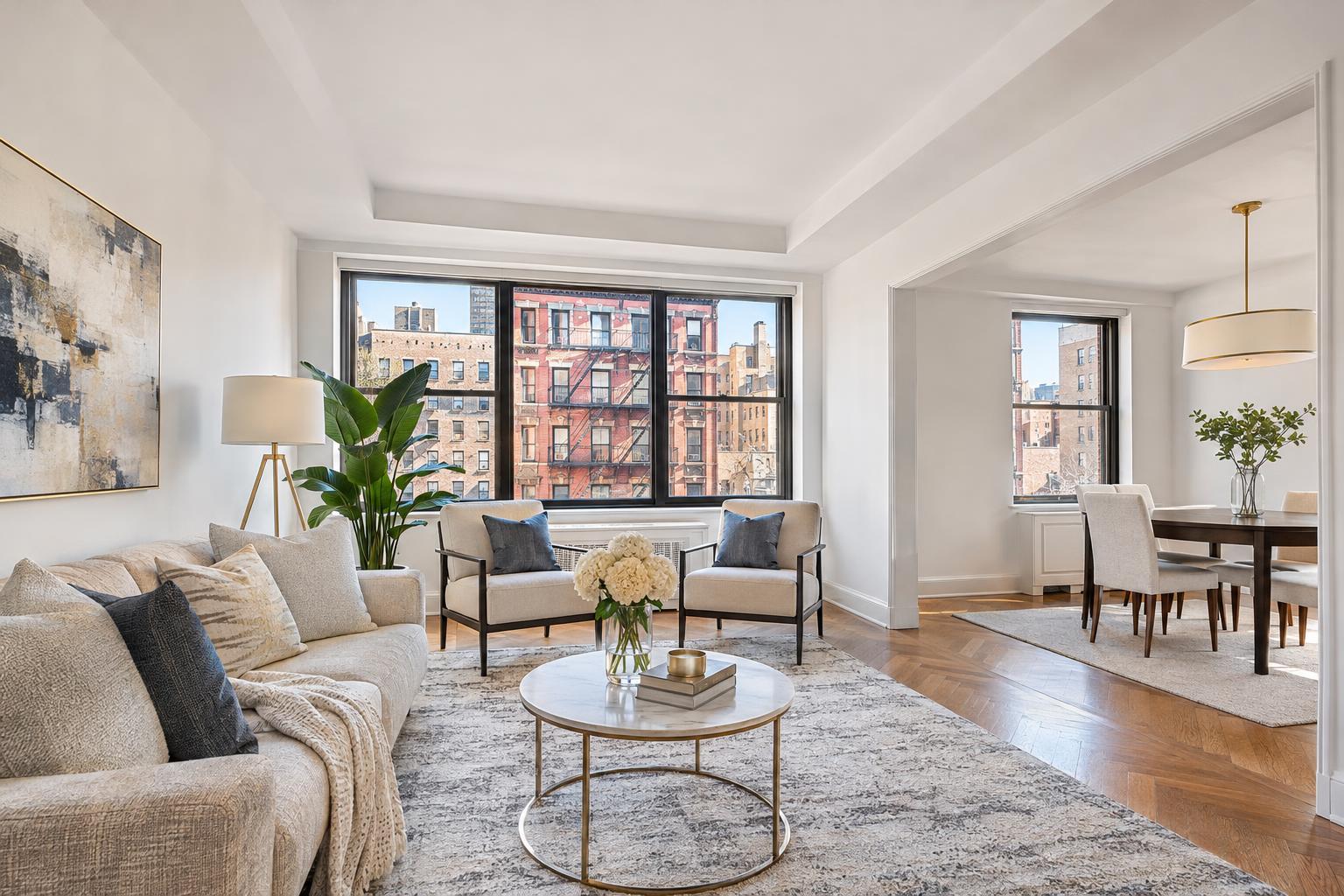
Showcasing a bright and spacious NYC apartment, the real estate marketing highlights elegant interiors with city views through large windows.

How to Choose Real Estate Marketing Services in NYC for Your Listing
Real estate marketing in NYC is never a one-size-fits-all process. From compact Manhattan co-ops to grand Brooklyn brownstones and new developments, each property needs a marketing plan that helps buyers, renters, and investors quickly grasp what makes it unique. The challenge? Deciding which real estate media services in NYC truly help explain the value of a listing—before anyone visits in person.
If you're an NYC agent, broker, property manager, or property owner with an upcoming listing, here's a practical guide to combining the right tools for your listing, preparing your space for capture, and choosing a coordinated approach that streamlines your process.
Understand What the Property Needs to Say
Every successful NYC property listing starts with clarity. Before you start shopping for media packages, consider the perspective of someone seeing your property online for the first time. Ask yourself:
- Does the listing's appeal rely most on its visual features (like light, finishes, or views)?
- Are there unusual layouts, multi-level spaces, or room connections that will need extra explanation?
- Is the property vacant, occupied, or staged?
- Does it have outdoor space, rooftop access, or a setting that's important to the buyer?
- Will remote decision-makers want to explore before visiting—or might they never see it in person at all?
The best marketing strategy is the one that makes your property easier to interpret. Some listings shine with excellent photography and a floor plan. Others benefit from video, virtual tours, or even drone media—chosen not for the sake of adding extras, but because they address real questions buyers will ask.
Why Professional Photography is the Foundation
For nearly every NYC listing, professional photography is the starting point. Good photos introduce a property visually across MLS, websites, brochures, email, and social channels. But this isn’t just about snapping every room. It’s about showcasing the property with intentional angles, keeping lines straight, balancing daylight, and showing a believable sense of space.
In Manhattan, that might mean highlighting efficient layouts, views, quality finishes, and open kitchen/dining/living areas. For a Brooklyn brownstone, you’ll want to trace movement from the entry through the parlor, up the stairs, and out to the garden.
Photography is particularly suited for:
- Co-ops, condos, townhomes, and single-family homes
- Rentals and model residences
- Commercial spaces, retail, and hospitality
- Properties where finishes, layout, or views matter most
A little prep can make a big difference. Before photos, clear away clutter, open window coverings where it improves the shot, remove personal photos, and tidy up surfaces. This helps ensure the property looks market-ready by photo day.
Video: Showing Movement and Experience
While photos offer neatly composed moments, video helps viewers experience the property as a sequence—walking from room to room or floor to floor. Video is powerful for listings where spatial flow is key: multi-level brownstones, big open lofts, apartments with strong arrival experiences, or any space where circulation shapes the feel.
Video is worth considering when:
- Room-to-room flow is a big selling point
- The home has multiple floors, wings, or outdoor spaces
- The listing is being marketed to buyers who want a richer sense of experience (especially on social or in email campaigns)
- Developers or commercial clients need a narrative walkthrough
For clarity: Listing videos are captured on-site, not just slideshows of photographs. The distinction matters—good video lets potential buyers "feel" the home’s flow.
Floor Plans: Answering the “How Does It All Fit?” Question
Especially in NYC, layout is often as important as style. Still photos show what’s in a space, but floor plans illustrate how rooms relate, where entrances are, and how the home flows overall.
Floor plans are especially useful for:
- Apartments or houses with unconventional layouts
- Duplex, triplex, and multi-level homes
- Combined or converted units
- New construction or commercial spaces where room functionality matters
It’s essential to capture floor plans on-site. These can’t be made remotely from architectural PDFs. Making sure the photographer has access to every area that needs to be mapped—bedrooms, closets, terraces, and connected units—ensures accuracy.
Interactive 3D Tours: Let Buyers Explore Remotely
Matterport and other 3D tours allow buyers, renters, or commercial tenants to go beyond photos and video—moving virtually through the listing at their own pace. This remote “walkthrough” is especially helpful for out-of-town clients, busy decision-makers, new developments, or larger properties.
All 3D tours require on-site scanning. They can’t be created from still images, floor plans, or renovation plans. Advance prep is key, because buyers can look everywhere—meaning any room included in a scan should be tidy and ready to show.
Virtual Staging: Make Empty Spaces Click
Virtual staging brings vacant rooms to life. Instead of struggling to picture size or function in an empty space, buyers see realistic furnishings in clean, well-lit rooms. This is most effective for condos, rentals, or new developments where scale isn’t obvious.
A few ground rules:
- Virtual staging works best on fully empty—or properly decluttered—rooms
- It can’t simply “paint over” existing furnishings or heavy clutter
- Choose realistic designs that fit the property, and don’t feel the need to stage every single photo
For occupied units, real decluttering or clutter-removal photo edits may be needed before virtual staging.
Drone Media: When Exterior Story Matters
Drone photography and video can capture what’s special about a property’s location: waterfront, large lots, gardens, rooftop spaces, or the relationship with the surrounding city. But flying a drone in New York is never automatic. Airspace rules, weather, roof access, safety, and pilot discretion all play a part. Roof access helps, but doesn’t guarantee a flight can happen.
Drone is best suited for:
- Properties with significant outdoor features or lot size
- Buildings where context or surroundings matter
- New developments or commercial properties
- Listings where a street-level view doesn’t tell the full story
Drone projects are always reviewed case by case, and if special permits are needed (beyond standard FAA authorization), clients are responsible for arranging them.
Building Access: Preventing Day-Of Headaches
Logistics matter in NYC. Before booking your media services, confirm:
- Entry instructions for agents, owners, tenants, or building staff
- Access to every room, roof, or outdoor area you want captured
- Limits on camera equipment or shoot time imposed by building management
- The condition of rooms and common areas
- Whether any services (like drone) are both feasible and needed
Especially in occupied homes, focus on visual simplicity. Clear surfaces, store away personal items, and only shoot rooms that are truly ready. Sometimes, it’s better to skip a room than to show it in its worst condition.
Matching the Media to Your Property Type
There’s no strict formula to follow, but these combinations work well for many listings:
Manhattan Apartments
Photography is always foundational. Add a floor plan if layout is important, video for memorable experiences or views, and 3D tours when you expect remote interest.
Brooklyn Brownstones & Multi-Level Townhomes
Photography, video, and floor plans together help explain a property’s space and flow.
New Developments
Consistency matters. Coordinate photography, floor plans, 3D tours, and video (when useful) to showcase model and amenity spaces.
Rentals & Vacant Units
Photography comes first. Floor plans help when a unique layout is a selling point, and select virtual staging can make empty rooms more relatable.
Commercial Spaces
Photography and floor plans are a smart minimum, with video, 3D tours, or drone media added if scale or location benefits from extra context.
Why Working with One Provider Simplifies Things
Coordinating everything through a single service provider—like RealtaSnap—means one appointment, one access plan, and a consistent look across all media. From photos to video, floor plans, 3D tours, drone media, and virtual staging, RealtaSnap handles every step on-site and provides options tailored for NYC listings.
If you’re planning your next listing, you can learn more about available services or get started through the RealtaSnap homepage.
A streamlined order process makes it easier to communicate entry instructions, building requirements, and special notes, all while keeping your visuals clean, professional, and ready for market.
FAQ
Question: What are the essential marketing assets for a New York apartment listing?
Answer: Almost every NYC apartment should start with professional photography. Add a floor plan if layout is a concern. Video or an interactive 3D tour can be very useful for larger homes, distinctive floor plans, or listings aimed at out-of-town buyers.
Question: Can virtual staging be used if there’s still some furniture in the room?
Answer: Virtual staging is designed for fully vacant or completely decluttered rooms. If there's furniture present, either clear the space before the shoot or request a clutter removal edit first—virtual furnishings aren’t layered on top of existing furniture.
Question: Is drone photography allowed anywhere in NYC?
Answer: Drone flights are handled case by case. Airspace, safety, weather, roof access, and pilot discretion all affect feasibility. Even with roof access, some locations or situations may not be eligible for a flight, and extra permits may be required in certain cases.
Ready for a simplified, coordinated approach to listing media in NYC? Explore options or start booking at www.RealtaSnap.com.