How to Choose an Architectural Photographer in NYC for Property Marketing
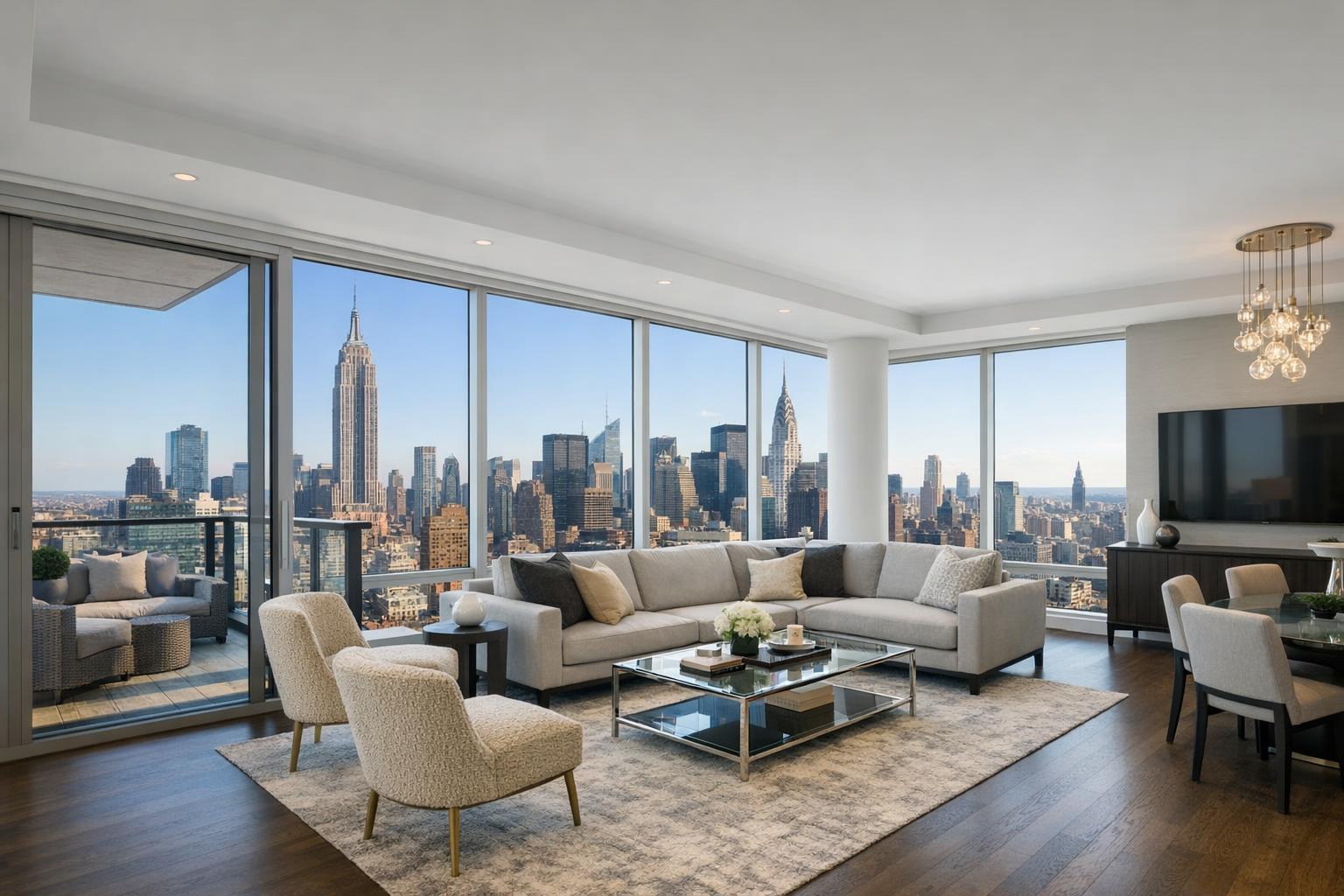
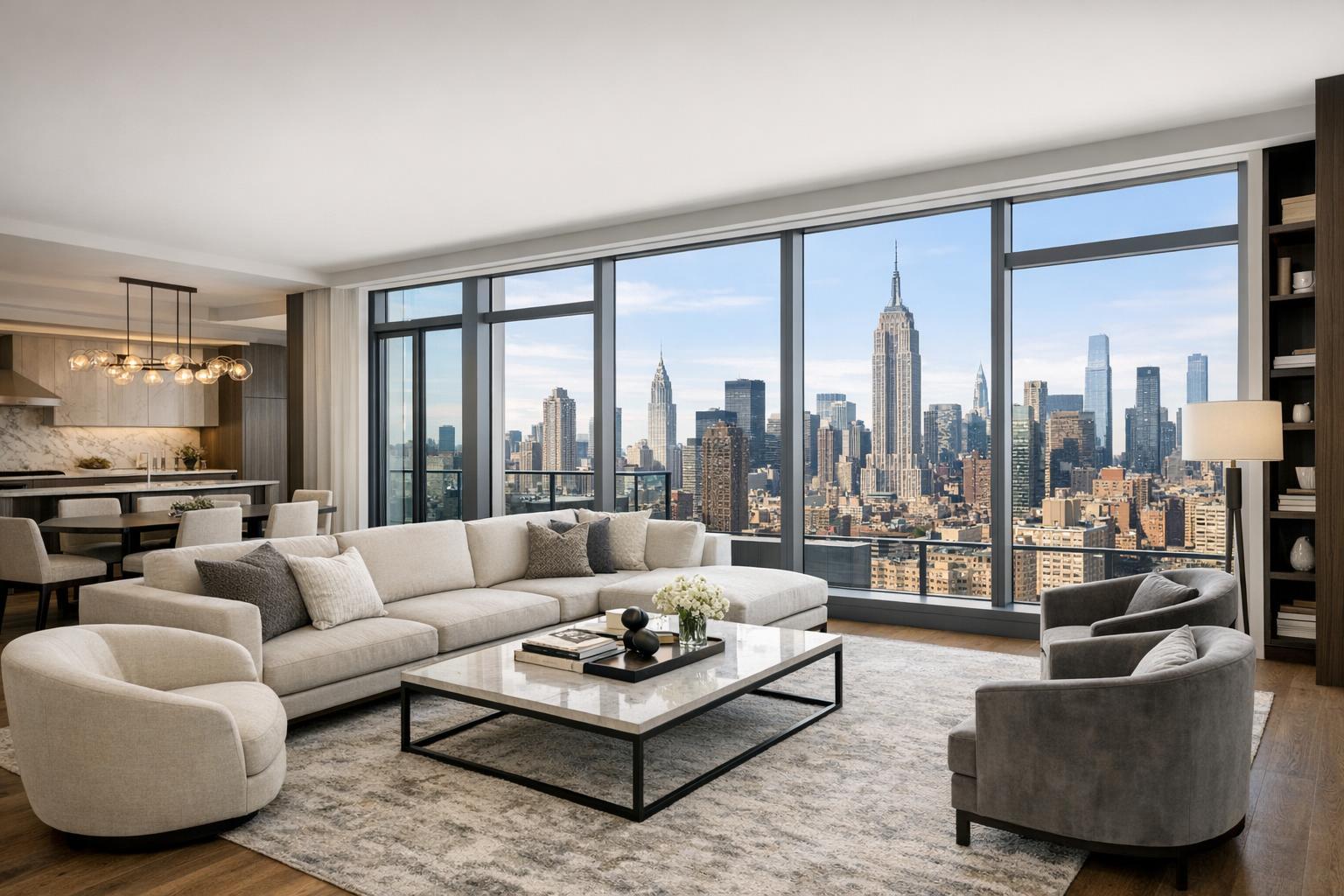
Captured by an architectural photographer in NYC, the image showcases a luxurious living room with a stunning panoramic view of the city's iconic skyline.

How to Choose an Architectural Photographer in NYC for Property Marketing
Selecting the right architectural photographer in NYC is more than just finding someone who can take sharp, well-lit images. In property marketing, especially for high-design residences, new developments, commercial spaces, and hospitality properties, you want a photographer who can interpret a space—translating design, light, materials, and flow into visuals that help prospective buyers, tenants, or guests truly understand the environment before they ever step inside.
In a city as visually diverse as New York, from stately pre-war apartments to sleek penthouses and vibrant retail fronts, standard real estate photography sometimes isn’t enough. Here’s how to recognize when to level up, what separates architectural work from the ordinary, and how to ensure you hire the right partner for your next listing.
Beyond Basic Listing Photos: What Sets Architectural Photography Apart
Most real estate listings rely on fast, straightforward photography to give viewers essential information: Where are the rooms? What’s the layout? Are there any upgrades or standout features? For many rentals and conventional apartments, this “show what’s there” approach works.
Architectural photography, by comparison, takes it a step further. These images are crafted with intent. The best architectural photographers don’t just record space—they reveal how rooms relate to one another, how light animates different surfaces, and how material choices and sightlines work together. The goals are accuracy, clarity, and credibility.
Key features to look for include:
- Purposeful composition and camera placement to capture depth and scale
- Straight verticals and corrected perspectives so the architecture looks right
- Thoughtful exposure, revealing both interior details and exterior views without unnatural lighting
- Images that clarify proportions rather than exaggerate size with super-wide lenses
- Consistency in editing across the entire set—lighting, color, and detail should feel unified
- Detail shots for unique millwork, fixtures, or built-in elements that give a property character
In short, an architectural photographer makes the design easy to understand—never distorting or overselling the space.
Decide How the Images Will Be Used
Before reaching out to photographers, think about your marketing needs. Is this for a sales listing? Leasing materials or an offering plan? Brand collateral for a new development? Hospitality marketing? Editorial submissions?
Purpose shapes image requirements. For example:
- A condo debut in Manhattan may need full layout coverage, plus shots showcasing views, kitchen finishes, and daylight.
- For a new building, consistency across multiple units and shared spaces matters—every image should speak the same visual language.
- Commercial real estate photography for offices or stores might prioritize visibility from the street, functional areas, signage, and neighborhood context.
- Hotels, restaurants, and event venues benefit from inviting, honest photos that clearly show room types, ambience, and amenities.
Be ready to discuss where these images will live—MLS, websites, social media, print packages, press, or leasing decks. The clearer your brief, the better the outcome.
When Does Architectural Photography Make Sense?
Not every property needs high-production photography. For standard rentals or lived-in resales where speed and simplicity are priorities, routine real estate imagery may suffice.
But a more architectural approach brings real value for:
- Design-focused residences: High-end condos, renovated brownstones, lofts, and historic homes with notable architectural details, materials, or distinctive layouts.
- New developments and model units: Projects needing a unified, premium look across website, brochures, and presentations.
- Commercial and retail spaces: Offices, stores, and showrooms that must communicate brand identity, workflow, and setting as well as square footage.
- Hospitality properties: Hotels, suites, and venues where images set guest expectations and influence bookings.
If the story of the space matters—or if specific design details are a key selling point—investing in architectural coverage is often worthwhile.
Reading a Portfolio with a Critical Eye
Anyone can showcase a few show-stopper “hero shots.” When reviewing a photographer’s work, try to think like your client, buyer, or guest. Is there consistency in how spaces are represented? Do images flow logically from room to room? Is the editing style subtle and believable, without cartoon-bright windows or heavy-handed retouching?
Ask yourself:
- Do even smaller or less glamorous rooms get the same thoughtful treatment as statement spaces?
- Are architectural lines straight and accurate, not distorted or slanting?
- Are colors and finishes natural—wood is warm, stone is crisp, metals don’t look plastic?
- Does the full gallery feel cohesive?
- Can you find portfolio examples similar to your own project type—whether that’s a residential co-op, commercial suite, or hospitality space?
Don’t be afraid to request complete project galleries, not just a highlight reel.
The Role of Editing: Refinement, Not Reinvention
Editing is a normal (and usually essential) part of professional property photography. It’s especially important in New York, where window light, mixed bulbs, complex materials, and reflective finishes make in-camera perfection almost impossible. Retouching is used to fine-tune color and exposure, correct distortions, and remove small distractions—never to fundamentally rewrite what’s really there.
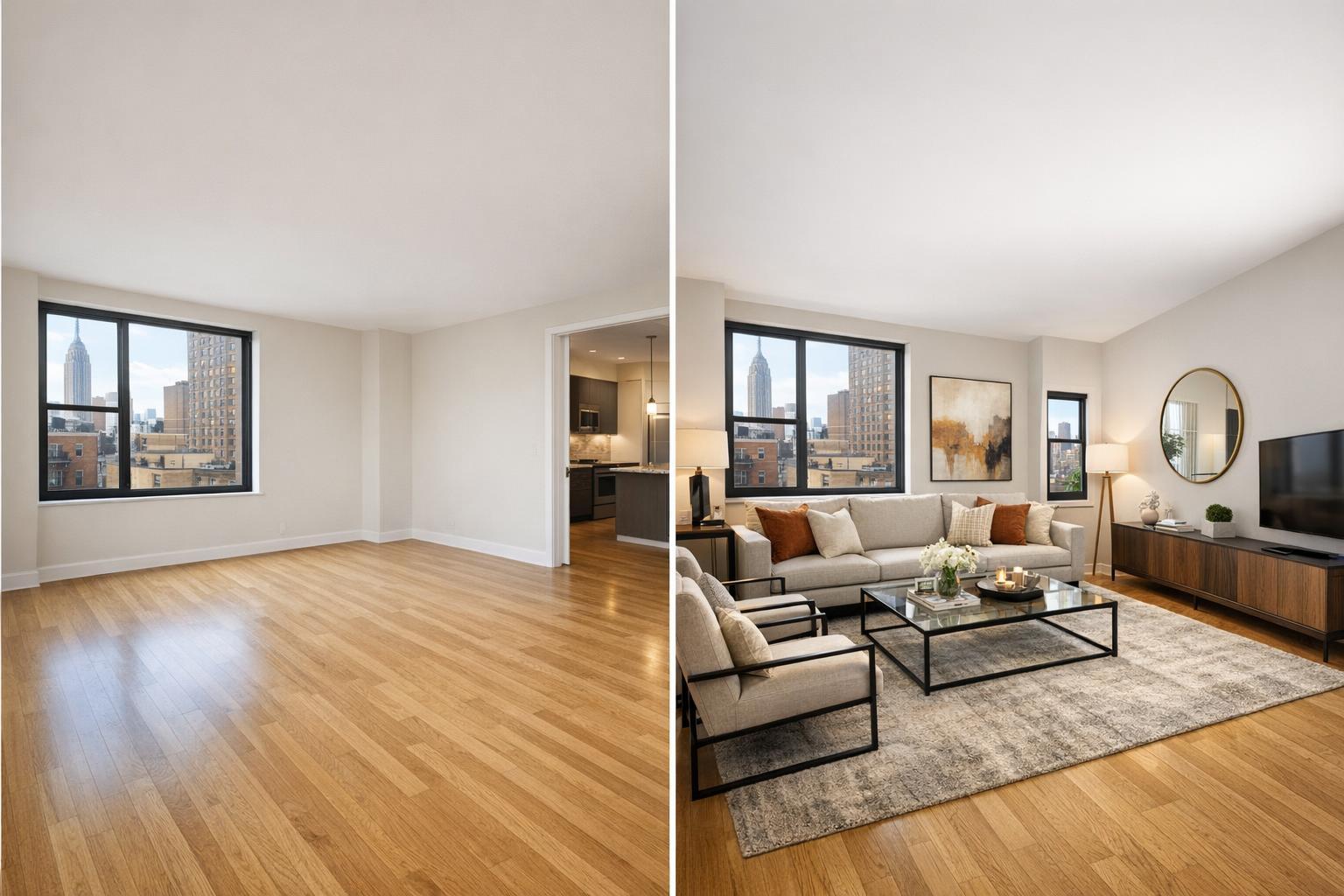
Ethical photographers keep edits honest. If you need a virtually staged photo to show an unfurnished space, be sure all clutter is cleared first for the most realistic result. Significant changes to structure, permanent fixtures, or layouts should never be digitally invented. Always ask what edits are included and what would require extra review or billing.
Solving NYC’s Unique Logistics
New York property photography requires planning. Gaining access to Manhattan high-rises or Brooklyn brownstones isn’t just a matter of showing up:
- Is a certificate of insurance (COI) or building authorization needed?
- Will you need to reserve an elevator or coordinate with a concierge?
- Are there time restrictions for shared spaces or building amenities?
- Who provides access if the agent or owner isn’t available?
- Is the property prepped, cleaned, and staged when the photographer arrives?
In the outer boroughs, access logistics can differ. Outdoor photography is also more complex than it seems—ideal exterior timing depends on the building’s compass orientation, adjacent structures, neighborhood activity, and the season. Early communication prevents misunderstandings and allows the photographer to plan for the best possible light and access.
Shot Lists: Offer Guidance, Not Micromanagement
Providing a list of must-have images can help keep a shoot focused, especially for properties with many uses or areas. For example:
- Exterior and entrance
- Main public rooms (living, dining, kitchen)
- Bedrooms, baths, and principal suites
- Views, terraces, balconies, or unique amenities
- Key design features—fireplaces, built-ins, stonework
- Commercial or hospitality context—lobbies, signage, street view, amenities
But resist turning the process into a rigid checklist. Experienced photographers often spot vignettes and moments on site that weren’t in the brief, but add real value. Communicate priorities and the “why” behind each image—“Photograph the kitchen to highlight custom cabinetry and connection to dining”—for more targeted results.
Getting Ready: Tips for Occupied Spaces
Staging is as important as camera work. Architecture photographs best in clean, organized, and lightly styled spaces. Homes full of personal items or busy surfaces will photograph as such, no matter the photographer’s skill.
For residential shoots, prepare by:
- Clearing kitchen and bathroom counters
- Removing pet items, electronics, cords, laundry, and bins
- Making beds and aligning seating
- Opening window shades for light (unless otherwise advised)
- Stowing valuables and personal photos
For active commercial or hospitality properties, communicating with staff ahead of time about access, service hours, customer flow, and sensitive spaces can make the session smoother and less disruptive.
Clarifying Deliverables and Turnaround
Set expectations for what will be delivered and when. The number of final photos, required areas, and any specialty media—like floor plans, 3D tours, or video—should be clear before the shoot. If you’re planning a launch or an event, mention your ideal turnaround so the photographer can coordinate timelines.
Remember, floor plans and 3D tours require on-site measurement and capture—these cannot be recreated accurately from photos or architectural PDFs.
Working with RealtaSnap
RealtaSnap works directly with clients across NYC, New Jersey, and select nearby areas, providing crisp, professionally edited property photos with a process designed for clarity and ease. Clients can book online and select coverage options that best fit their projects. The focus is on presenting the property honestly—with intentional composition and consistent editing—so that the final images reflect the power and personality of your space.
You can book a session, review prep guides, or learn more about available services via the RealtaSnap website.
Choosing the right NYC property photographer isn’t just about finding the most attractive photo—it’s about finding someone who will treat your listing with respect, work efficiently within local building protocols, and help you present your property with precision and trustworthiness.
For all booking and service details, visit www.RealtaSnap.com.
FAQ
Question: How do I know if a photographer’s portfolio fits my property type?
Answer: Look for complete projects—ideally similar in style, scale, and condition to your own property. Review how a photographer handles both wide shots and fine details, and whether the editing feels consistent across different room types. Don’t hesitate to ask for a selection of galleries specific to co-ops, lofts, offices, or hospitality spaces if that’s what you’re marketing.
Question: What’s the difference between standard real estate photography and architectural photography?
Answer: Standard real estate photography is designed for quick, clear documentation of basic layouts—suitable for conventional apartments and rentals. Architectural photography uses purposeful composition, careful lighting, and editing to highlight design, materials, and flow without exaggerating or misrepresenting the space. It’s a better fit for high-design properties or when specific details matter.
Question: Can virtual staging or floor plans be provided if I only have listing photos?
Answer: For accurate floor plans or interactive 3D tours, the property must be captured in person—existing photos or PDFs aren’t enough for reliable spatial measurements. Virtual staging is possible for empty rooms, but for furnished spaces, additional decluttering or object removal may be needed first. For more details and options, check RealtaSnap’s prep guide.
Ready to present your property at its best? Book your session and browse examples at www.RealtaSnap.com.