What Real Estate Media Services Does Your Listing Actually Need?
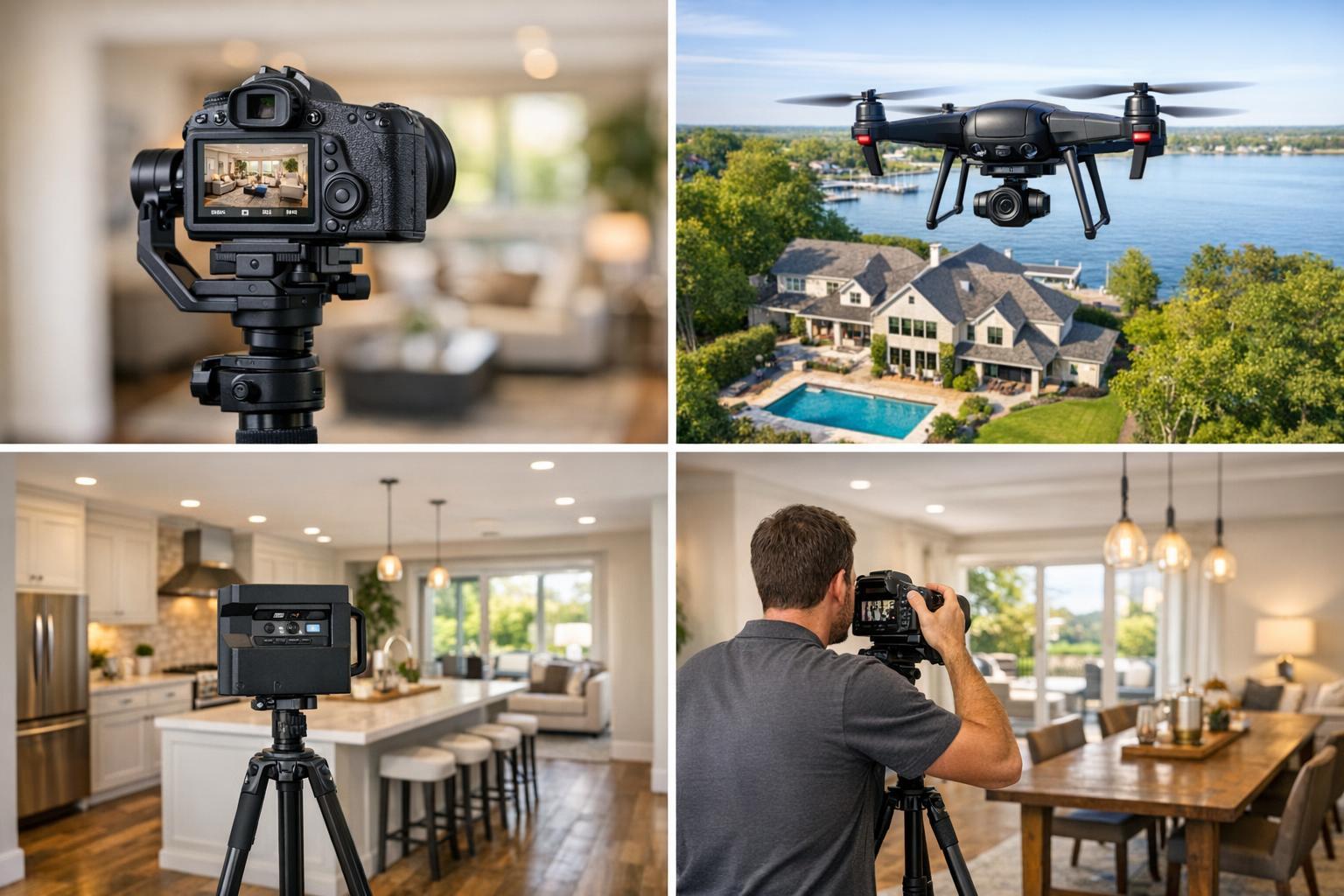
Real estate media is showcased through various tools like cameras, a drone capturing an aerial view of a lakeside property, sophisticated studio equipment, and a photographer at work inside a home.

What Real Estate Media Services Does Your Listing Actually Need?
Real estate media is most valuable when it gives potential buyers or renters a clear sense of a specific property—not when it simply piles on every possible visual option “just because.” Whether you’re working on a compact Manhattan apartment, a Brooklyn brownstone, a modern Jersey City condo, or a sprawling New Jersey home, the best property marketing visuals for your listing should match its unique qualities and the questions buyers really have.
Let's break down how to decide which real estate media services actually make sense for your next listing, and why not every asset is needed every time.
Start With the Property, Not a Pre-Made Package
The best starting point is always the property itself. Before choosing media services, look at the listing through the eyes of someone seeing it online. Which aspects of the space are straightforward? Which could be confusing or overlooked in still photos?
Tuning your media plan to the property means weighing details like:
- How large is the home, and how many rooms does it have?
- Is the layout simple, or will some areas feel disconnected from others in photos?
- Does the property have architectural details or finishes worth highlighting?
- How does natural light, outdoor space, or views factor in?
- Is the home vacant, occupied, or staged?
- How much does the exterior setting or neighborhood context matter?
- Where will the listing be published—and what do those platforms prioritize?
- Are there specific marketing visuals you need due to budget?
For a studio or small one-bedroom, high-quality photography and perhaps a floor plan might be enough. In contrast, a multi-level home with unique spaces, yards, or exterior features could benefit from a more blended approach. The idea is never to overdo the production—it’s to let each media type serve a clear function for the listing.
Photography: The Foundation of Any Solid Listing
Nearly every listing starts with professional photography. Good, well-planned photos establish how a property is perceived across every channel, from broker sites to social feeds to email marketing.
Polished listing photography can show:
- Room sizes and proportions
- Light, texture, and finishes
- Connections between main living areas
- Kitchen, bath, and amenity conditions
- Views, balconies, decks, or shared spaces
In properties where details matter—think: original millwork, tall ceilings, elaborate staircases—photography’s role becomes even more central. A Brooklyn brownstone may be defined by the flow from stoop to parlor floor, while a Jersey City condo might make its strongest impression with sleek interiors and skyline views.
Photos are most effective if the property is tidied prior to the shoot. Remove clutter, hide cords, tuck away personal items, open window shades, and make beds so the home looks inviting and intentional. Not every corner needs to be shown, but the photos should make the property easy to mentally map.
When Does Video Actually Help?
Video is an asset when still images alone don’t tell the whole story—especially when the “flow” between rooms is a selling point. A proper video guides a viewer from entry through the space, showing movement and how the home unfolds.
Consider adding video for:
- Multi-level properties or townhouses
- Homes where staircases, transitions, or connected spaces matter
- Condos with impressive arrival experiences or amenity tours
- Listings with memorable indoor/outdoor flow
For example, a classic four-story Brooklyn brownstone benefits from video: you can visually travel from garden level through each floor to the rear yard, making the vertical journey and connections clear in a way photos alone can’t handle.
However, for a simple Manhattan one-bedroom, video might be overkill unless there’s something visually remarkable—like a terrace, lofted space, or dramatic viewpoint. In most cases, RealtaSnap videos are filmed on-site as part of the original appointment (never as a slideshow of photos), so plan ahead if you think you’ll want this asset.
Floor Plans: When Layout Makes the Decision
If buyers are likely to question how rooms relate to each other, where bedrooms sit, or how a home office fits into the bigger picture, then a floor plan can make a major difference. While photos focus on beauty and atmosphere, a floor plan answers layout questions directly.
Popular scenarios for floor plans include:
- Apartments with unusual or split layouts
- Duplexes, triplexes, and multi-floor townhouses
- Homes with additions or finished lower levels
- Listings with a mix of bedrooms, dens, or accessory spaces
For a Jersey City condo, even if photos show a sunny living room, prospects may still want to know: are bedrooms on either side of the unit (for privacy)? Is there a nook for an office? How does the kitchen relate to the entertaining space? Only a floor plan makes these answers obvious at a glance.
Keep in mind: floor plans require on-site capture—RealtaSnap doesn’t create these from existing site plans or photos. If the property combines multiple units, all spaces will need to be accessible at the time of capture.
3D Tours: For Buyers Who Want to Explore
A 3D tour (such as Matterport) lets viewers move through the listing as they wish, clicking into rooms and looking around at their own pace. This kind of interactive visual is especially useful for:
- Larger or complex homes
- Properties with multiple stories or wings
- Listings that might attract remote or long-distance interest
- Clean, open-layout condos
- Homes with hard-to-photograph spaces like lofts or finished basements
For a big New Jersey home with both formal and informal rooms, a kitchen made for gatherings, finished basement, and outdoor zones, static images might not capture the full experience. A 3D tour allows someone to really “walk through” online first, which can make them better prepared—and more likely to request a showing.
Remember: 3D tours require physical on-site scanning just like floor plans and video. They cannot be created retroactively from photos.
Aerial Media: Is the Exterior Part of the Story?
Drone photos or video can add the bigger picture—literally—when the property’s setting is a genuine selling point. This might include:
- Larger homes with expansive grounds
- Waterfront, park-adjacent, or view-oriented locations
- Properties featuring outdoor amenities like pools, gardens, or patios
- Unique architectural footprints or dramatic rooflines
- Jersey Shore properties or suburban homes on large lots
For these listings, aerial shots might show the relation of the house to water, yard, or adjacent green space. In Manhattan or dense NYC areas, drone feasibility is affected by airspace rules, building height, roof access, and safety. RealtaSnap evaluates every drone request case by case; providing the address early helps to determine what’s possible.
Drone media should make sense—if the exterior context doesn’t add value, budget may be better spent on other media assets.
Virtual Staging: Giving Empty Spaces Instant Appeal
An unfurnished room can be challenging for buyers to interpret. Virtual staging demonstrates how a living area, bedroom, or office could look when furnished, showing scale and possible uses. It’s best suited for:
- Vacant or recently built homes
- Investment or rental units between tenants
- Open-plan areas needing visual definition
- Rooms where the function isn’t clear
Virtual staging by RealtaSnap works only on empty rooms. If there’s existing furniture, it needs to be removed before shooting or digitally edited out prior to staging. Staged images should always be paired with at least a few unstaged shots, so buyers can see the actual space without digital furnishings.
Real-World Listing Scenarios—What Makes Sense?
Every listing is different. Here’s how media choices might look in four common situations:
A small Manhattan apartment:
- Professional photography
- Floor plan if the layout isn’t obvious
- Virtual staging if vacant
Video and 3D tours are usually “nice-to-haves” unless the space is unusually distinctive.
A Brooklyn brownstone:
- Photography highlighting detail and atmosphere
- Video capturing the vertical flow
- Floor plan showing all levels
- 3D tour if the home is large or intricate
- Drone, if exterior context or architectural scale matters
A Jersey City condo:
- Professional photography as a base
- Floor plan clarifying bedroom and living area relationships
- 3D tour for upscale/high-end units
- Video if the listing offers a truly unique entry, outdoor space, or amenity
A larger New Jersey home:
- Photography
- Video
- Floor plans
- 3D tour for full walk-through experience
- Drone media if exterior context is meaningful and feasible
- Virtual staging for any empty secondary rooms
Each media asset should answer a different question, without unnecessary overlap.
Coordinating Property Marketing Visuals
Choosing the right provider goes a long way when you’re managing several media types—and trying to keep your timeline on track. RealtaSnap offers coordinated real estate media services throughout NYC and New Jersey, with seamless scheduling and in-house pros handling everything from photography and video to aerials, floor plans, 3D tours, and virtual staging.
You don’t need every service for every home. Start with the visuals that make the listing clear and searchable, then add assets that address specific presentation needs.
Ready to build a property marketing plan that fits your next listing? See what's available through RealtaSnap's services overview and get everything scheduled in one place.
FAQ
Question: Does every listing need a floor plan to sell?
Answer: Not always. Floor plans make the most sense when buyers may be unclear about room relationships, proportion, or how unique layouts work. Studios or simple one-beds can often be marketed with photography alone, while more complex homes or condos benefit from the added clarity of a floor plan.
Question: Can I add video, floor plans, or 3D tours to a listing after photos are taken?
Answer: These assets all require on-site capture. If you think a property may need more than photography, it's best to plan everything up front—especially since 3D tours and floor plans can’t be created from photos or old documents.
Question: Are drone services available for every NYC or NJ listing?
Answer: Drone feasibility depends on airspace, weather, building access, safety, and local restrictions. RealtaSnap reviews each request on a case-by-case basis. Provide the listing address early, so they can check if aerial media is an option.
Ready to get started or explore your marketing options? Visit www.RealtaSnap.com for details and scheduling.